

When: October 2025 – January 2026
Where: Virtual Sessions
Session Type: Participation via Expression of Interest
Organizing institute: The George Institute for Global Health, India
Course Brief:
The NIHR Global Health Research Centre for Non-communicable Diseases and Environmental Change facilitated a training course on Qualitative Data Coding and Analysis. Expertly led by Dr. Y K Sandhya and Dr. Sreya Majumdar from the George Institute for Global Health, India, the course had 31 participants from Indonesia, India, and Bangladesh. Delivered through the Global RT Moodle platform, the course featured five interactive sessions along with three assignments designed specifically for the cohort, ensuring a rich learning experience.
Intended learning objectives:
- To differentiate between inductive, deductive, and thematic coding approaches.
- To develop and apply a coding framework.
- To identify and synthesize emerging themes.
- To acquire practice skills by using software to code and organize qualitative data efficiently.
Spanning over 5.5 hours (5 live interactive sessions conducted via zoom with reading material & 3 assignments), the training course offered valuable insights and knowledge. Participant were placed in diverse, cross-country assignment groups to address case studies relevant to each module—creating a unique opportunity to present findings in a live setting and direct feedback. An approach that participants found both novel and beneficial. The valuable aspects of the training, according to participants, included:
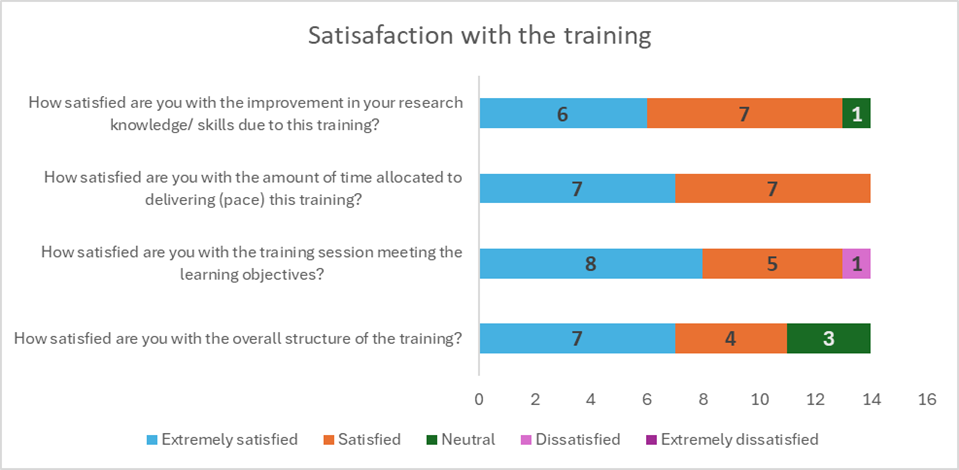
- Clarity on the method of analysis
- Feedback on assignments
- Practical session on codebook development
- On-spot resolution of queries
- Understanding the types of coding & analysis
- Session on N-vivo
“This training has been very helpful in enabling me to understand the process of qualitative data analysis”
Foundation of Qualitative Coding
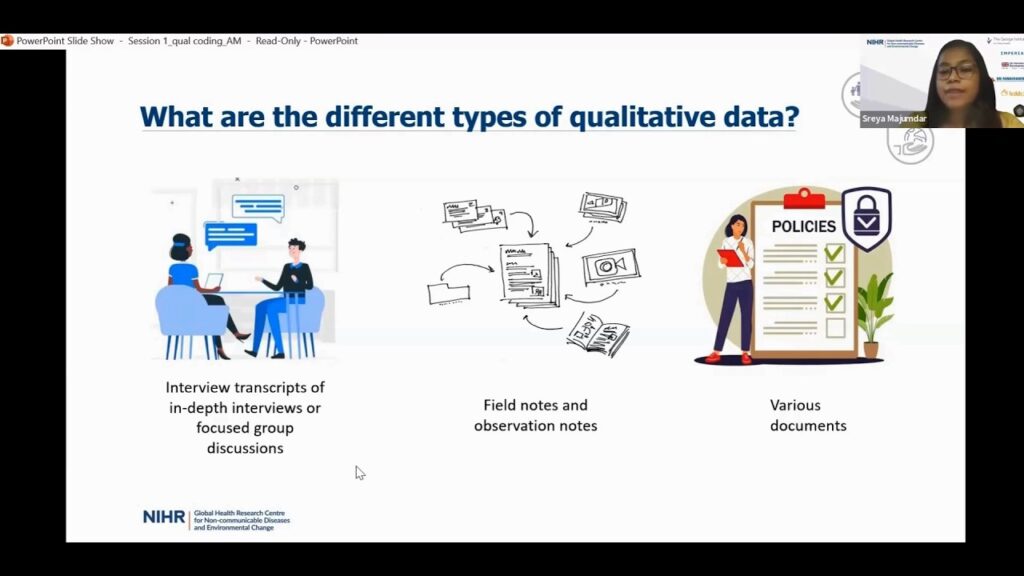
Join Dr. Yatirajula Kanaka Sandhya, Program Lead, Mental Health and Dr. Sreya Majumdar, Research Fellow at the George Institute for Global Health, as they take us through the crucial building blocks of qualitative data coding to enhance research validity and reliability by creating a transparent and traceable pathway from data collection to insightful & actionable findings.
Approaches to Coding and an Introduction to Codebook Development
In a step-by-step guide brought to you by Dr. Yatirajula Kanaka Sandhya, Program Lead, Mental Health and Dr. Sreya Majumdar, Research Fellow at the George Institute for Global Health, learn how to take qualitative data and organise, structure, analyze, and interpret it into powerful, actionable insights that can drive positive change.
Construction of Codes, Categories & Themes in Qualitative Data Coding

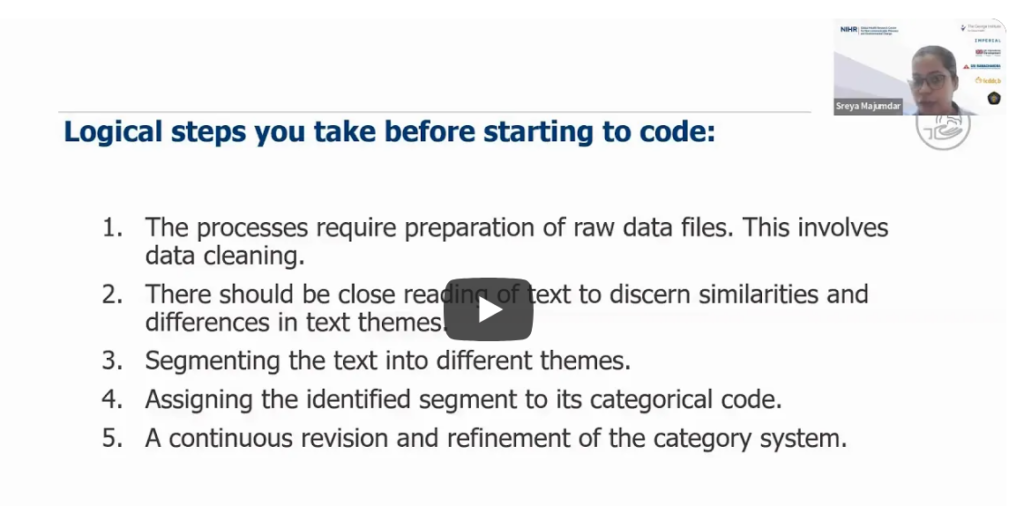
Join Dr. Yatirajula Kanaka Sandhya, Program Lead, Mental Health and Dr. Sreya Majumdar, Research Fellow at the George Institute for Global Health, as they take us through the challenges and iterative process of the construction of codes, categories & themes of qualitative data coding. Uncover meaningful patterns that tie codes and categories closely to research questions establishing overarching themes, emphasizing critical areas for improvement, and providing profound insights.
Analysis and Interpretation of Data Coded
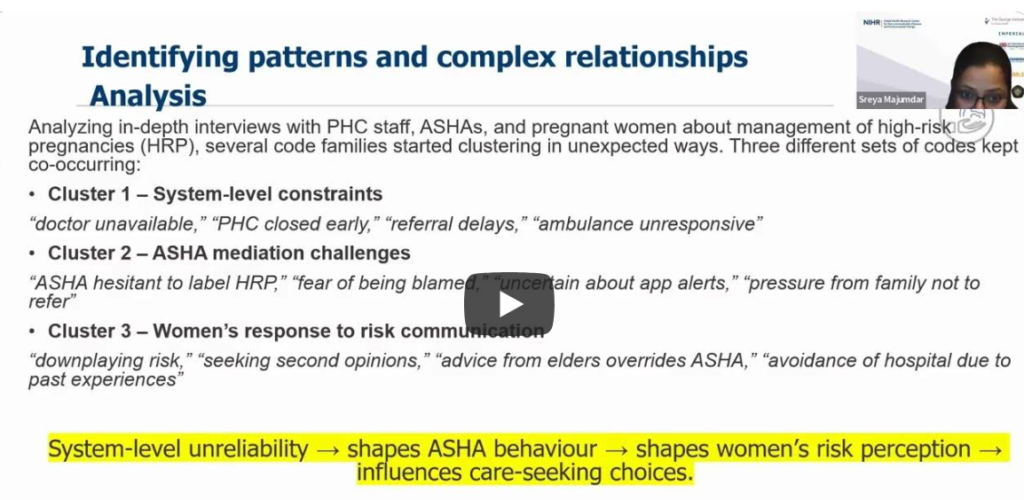
Unlock valuable insights from your coded data, as Dr. Yatirajula Kanaka Sandhya, Program Lead, Mental Health and Dr. Sreya Majumdar, Research Fellow at the George Institute for Global Health, take you through a step-by-step guide on how to distinguish themes, analyse and interpret coded data. Delve deeper into your data to uncover recurring themes and concepts, analyse different codes, categories, or participant responses to highlight significant differences and similarities
Early and mid-career researchers found the training helpfully instructive, asserting that
“Since I am new for this qualitative data analysis, it helped me a lot as a beginner”
——————————————————
This research was funded by the NIHR (Global Health Research Centre for Non-communicable Diseases and Environmental Change) using UK international development funding from the UK Government to support global health research. The views expressed in this publication are those of the author(s) and not necessarily those of the NIHR or the UK government.