Our NIHR Global Health Research Centre for Non-communicable Diseases and Environmental Change hosted its Third Annual Symposium in Hyderabad on the 9th – 10th December 2025. The symposium is one of the Centre’s most valued gatherings, offering a rare opportunity for colleagues from all partner institutions to come together, share learnings, progress, and collectively reflect on challenges and the road ahead. This year, the event centred around the theme “Beyond the Halfway Mark: Scaling Impact at the Nexus of Environment and Health.”
When Participation Means Leaving Comfort Far Behind
The night before Day 1, I barely slept. Two of our community representatives were still travelling, making their way to Hyderabad after their flight had been cancelled. What was meant to be a short journey by air had turned into nearly twenty-four hours of travel by road. Every few hours, I checked my phone, hoping for a message confirming that they were close. We had planned for them to arrive a day in advance, and there I was, glued to my phone, restlessly checking my messages, and wondering whether they would even make it on time.
They arrived the next morning with just forty-five minutes to freshen up, have breakfast, and come to the symposium venue. Upon their arrival, I learnt that Jamni didi, one of our community representatives had spent much of the night unwell and had been frequently vomiting during the long bus journey, yet when I met her and asked if she was well or wanted to go back to the room and get some rest, she simply smiled and said, “कोई बात नहीं भैय्या, हो जाएगा ” (Don’t worry, I will manage).
The session they had travelled so far and so arduously to attend would last just over an hour. But their journey was a powerful reminder of something we do not talk about often enough: meaningful participation from communities rarely happens effortlessly. It requires commitment, motivation, and a willingness to step far outside one’s comfort zone. The experience also reinforced why the process behind community engagement matters just as much as the event itself.
What Does It Really Mean to Give Communities a Seat at the Table?
As an integrated theme, Community Engagement and Involvement (CEI) is embedded across every stage of our research. To showcase the CEI approach and how it makes research relevant, responsive, translatable, and accountable, we organise a dedicated CEI session in each symposium. When the agenda for this year’s symposium was shared with me, it was suggested that for the CEI session, we record video messages from our communities across countries sharing their experiences in the form of challenges, successes, and transformative moments from the field. The idea was to provide another simple and accessible way for community voices to be heard. Given the limited time available, travel challenges, language barriers, etc., this also seemed like a practical solution, although I was given complete freedom to modify and design this session into any other format.
While the original plan for the session focused on amplifying community voices through short, recorded reflections, we intentionally kept the session design open as our thinking evolved. As we thought through how researchers and community representatives could engage on the same stage, early feedback encouraged us to create a shared, face-to-face setting that felt closer to a cocreation space than a conventional panel. This direction resonated with us and ultimately shaped how the session was framed as a perspective dialogue.
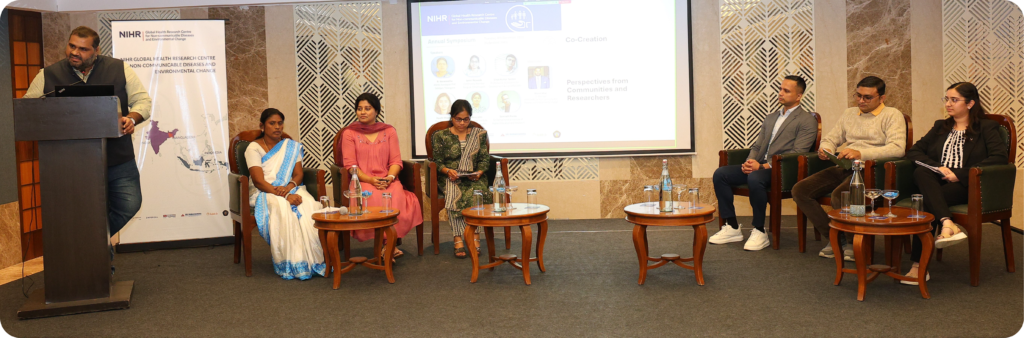
Through discussions across the Centre and beyond, our thinking also shifted on what would matter most in such a space. Rather than focusing on how provocative or complex the questions needed to be, conversations repeatedly brought us back to the importance of who would be representing the communities and the experiences they carried into the room.
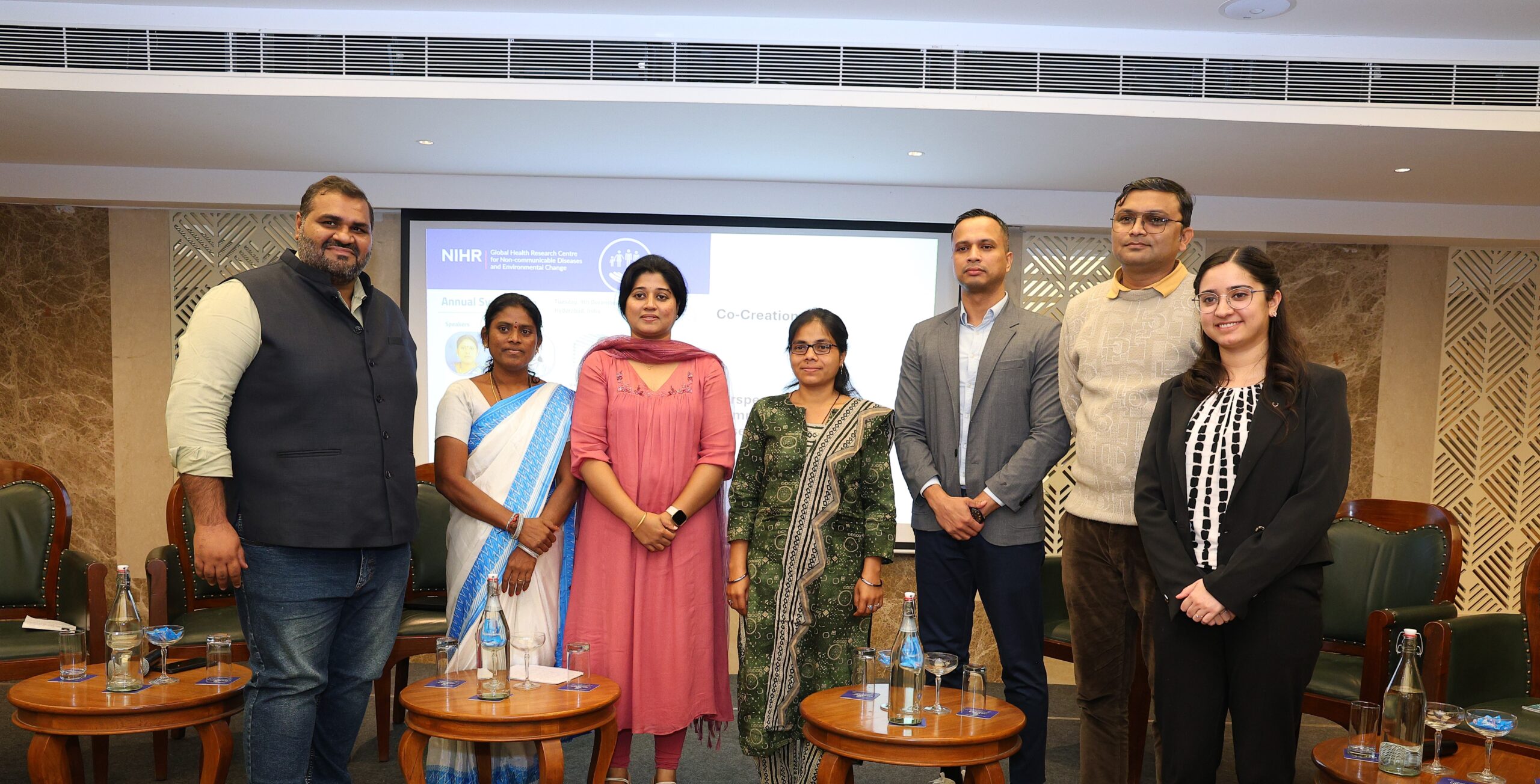
From left to right: Maroof Khan, B. Navaneetha, Dr. Renu John, Jamni Rajwade, Dr. Somnath Panda, Vikas KumarTandon, Dr. Ayushi Dhasmana
It became clear that simple, foundational issues such as trust, relationships, and lived experience would allow deeper insights to surface more naturally than carefully crafted prompts alone. This thinking reinforced the decision to prioritise representation and presence, ensuring that community voices were not only heard but situated at the centre of the conversation.
Designing a Dialogue that Reflects Shared Ownership
We structured the session as a perspective dialogue rather than a traditional panel. Community representatives and researchers responded to the same reflective questions:
- What does meaningful community engagement actually look like?
- How do communities see research creating impact?
- What helps build trust, and what puts it at risk?
The aim was not to create a debate or highlight differences, but to place lived experience and scientific practice in a shared reflective space.
To make this process participatory so that audiences weren’t mere spectators, we included short emotional check-ins using a live gesture poll. After each exchange, participants could indicate whether the responses made them feel hopeful, confused, or concerned. As the dialogue unfolded, it was clear that participants in the room were deeply tuned in, with most expressing a sense of hope as they listened to different perspectives. There were also moments that prompted quieter reflection, particularly when community representatives spoke about how trust is built through consistency rather than promises. These reflections resonated strongly, serving as a reminder that trust is a fragile, ongoing process that develops over time and requires sustained effort. The pause that followed signalled thoughtful engagement rather than disengagement, with visible reflection among researchers in the room.
But designing the session format was only one part of the work. Enabling community representatives to participate meaningfully requires deeper preparation and support behind the scenes.
Finding the Right Voices
Identifying community representatives took careful thought and a great deal of quiet labour. The quest started with calls, cancellations, refusals, logistical hurdles, conversations with families and navigating logistics that seldom show up in session summaries. Selecting community participants required careful thought. The goal was not to invite someone who was already accustomed to speaking at formal events, but rather someone whose experience genuinely reflected the realities of working with research interventions on the ground. At the same time, we had to ensure the platform did not feel intimidating for those unfamiliar with such settings and that they received adequate guidance and support to participate comfortably.
Several people declined the invitation as some had family responsibilities they could not leave behind, and others had never travelled such long distances before and were understandably hesitant. In our field sites, we encountered this very challenge, particularly with women community members and frontline workers. When we approached them, they were willing but ultimately unable to attend because they would need permission from husbands or elder family members to travel, and in some cases, the families were uncomfortable with them going to an unfamiliar city or staying away overnight. These patriarchal norms around mobility, safety, and women’s roles at home directly shaped who could participate. As a result, identifying women speakers required additional conversations, reassurance, and coordination, reflecting the real social barriers our teams routinely navigate on the ground.
The search came to an end eventually when a positive email popped up in my inbox stating that our NGO partner, PRADAN, in the Surguja district of Chhattisgarh, has agreed to send Mr Vikas Tandon, who has been leading the partnership with our research team in supporting the development and management of community-based
nutri-gardens.
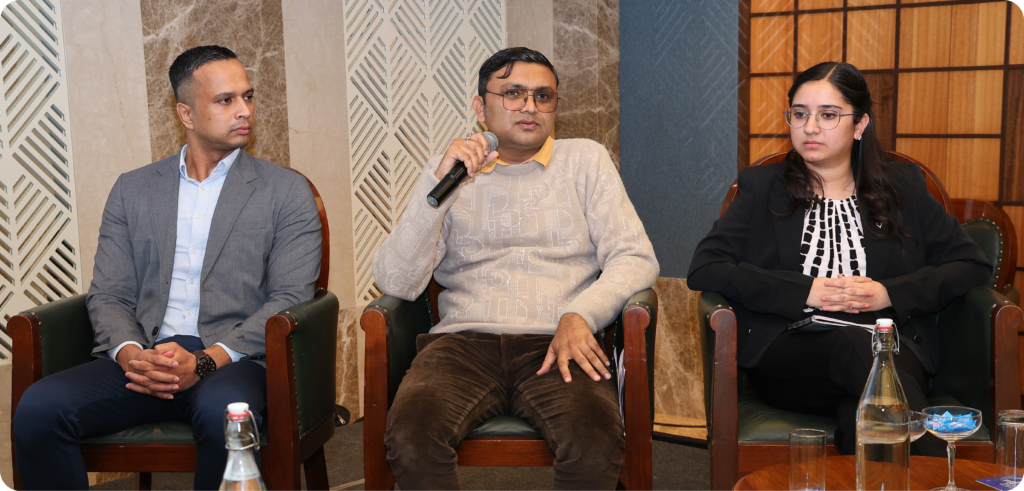
From left to right: Dr. Somnath Panda, Vikas KumarTandon, Dr. Ayushi Dhasmana
Later, when I connected with Vikas, he put forth Jamni Rajwade, a farmer and community resource person involved in the nutri-garden initiative, as someone who could attend the session. We were also keen on inviting an ASHA worker as they play a key role in our health systems research, but we struggled to convince anyone from our field site in Srikakulam district of Andhra Pradesh because of the aforementioned reasons and managed to identify Navaneetha didi who is working as an ASHA worker in the Siddipet district of Telangana and had previously contributed to a digital health research project.
Preparing for Participation, Not Just Attendance
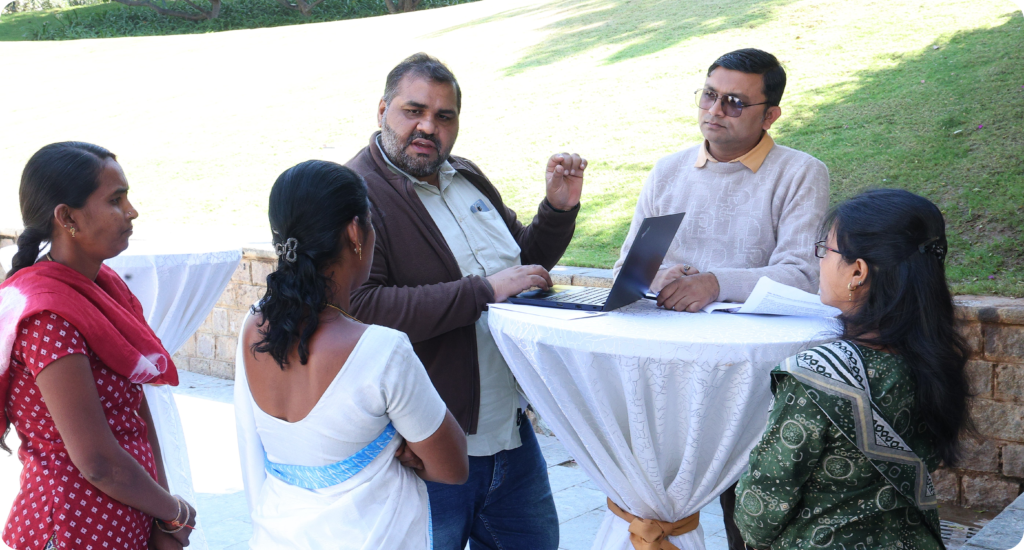
Inviting community members is one thing; preparing them to participate with confidence is another. Once the speakers were identified, the real work began. We held several preparatory conversations—sometimes together, sometimes one‑on‑one—to explain the purpose of the session, share the guiding questions, and give them space to reflect on what they wanted to say.
From left to right: Srilatha, B. Navaneetha, Maroof Khan, Vikas KumarTandon, Jamni Rajwade
These calls were not formal briefings; they were gentle, patient discussions that helped build comfort, clarity, and trust.
Language was another important consideration. Jamni didi preferred speaking in Hindi, while Navaneetha didi felt more confident expressing herself in Telugu. Although she understood Hindi and even agreed to speak in Hindi, I could sense on that first call that her comfort lay in her mother tongue, and she would be able to express her views fully in it. I strongly recommended that she speak in the language that she is most comfortable in.
To make this process smooth, colleagues kindly stepped in to support translation during the session. These arrangements may seem like small logistical details, but they play an important role in ensuring that participation is genuinely inclusive rather than performative.
What Meaningful CEI Really Requires
Meaningful community engagement is not an outcome – it is a process. Looking back, organising this session reinforced a lesson I have come to believe strongly: Meaningful engagement is not automatic. It requires thoughtful design, careful preparation, empathy and continuous reflection. It requires recognising barriers and actively working to dismantle them.
We often say that we step out of our comfort zones when we enter communities. Yet, in reality, communities step much further out of theirs to meet us halfway. For researchers, participating in a symposium panel is familiar territory. For community representatives, it can mean travelling across states for a one-hour conversation, speaking on a stage for the first time, or trusting that their voices will be valued in spaces where they have rarely been present.
Jamni didi took her first flight on the way back, having travelled further than ever before. Navaneetha didi, despite being nearly two decades as a health worker, had never spoken on such a platform. Both participated with sincerity and courage ‑ a reminder that engagement is not about inviting people to attend, but about recognising and respecting the effort it takes for them to be there.
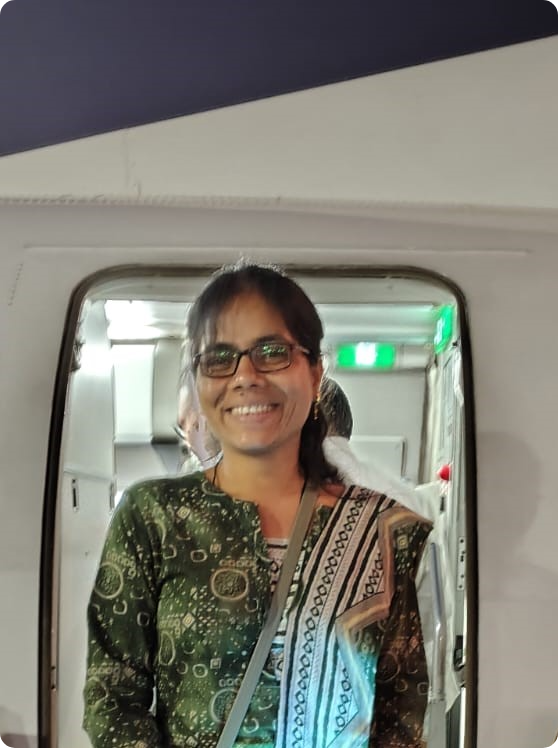
Jamni Rajwade
If co‑creation is truly at the heart of our work, then our responsibility is not only to involve communities in research activities, but also to ensure that they have a meaningful place in shaping that work. Because meaningful community engagement is not defined by the session we organise, rather, it is defined by the process we follow to make that session possible.
Some quiet moments I’ll remember
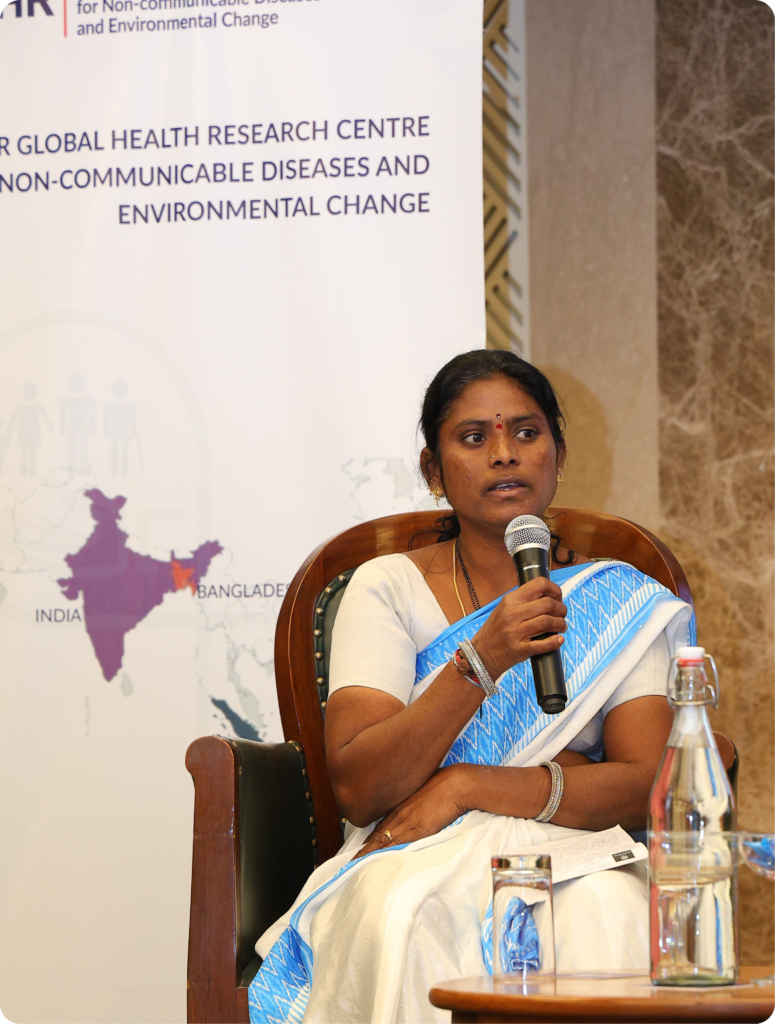
While preparing her response to the question, “What helps build trust, and what puts it at risk?” Navaneetha didi asked me “भैय्या, आपको पता है ‘trust’ को हमारी भाषा में क्या कहते हैं?” (Do you know what we call ‘trust’ in our language?) and I said no. She told me, trust in Telugu means Nam’makaṁ. If there is one word that I will always remember in Telugu, it is this.
B. Navaneetha
After the session, I watched people line up to thank me and our community representatives, some with questions, others just to say, “this mattered.” I thought back to the sleepless night tracking a bus on a map, worrying if our speakers would reach safely, and whether they’d still have the strength to participate. They did. They spoke with clarity and courage. And the room listened.
That’s what co-creation looked like that day, not perfect, but honest. Not easy, but real.
With heartfelt thanks
To Jamni Rajwade and Vikas Tandon (PRADAN, Surguja) for the extraordinary commitment to be present; to B. Navaneetha for bringing the wisdom of lived experience from Siddipet; to Dr. Renu John, Dr. Somnath Panda, and Dr. Ayushi Dhasmana for engaging with humility and depth; to Suruchi Agarwal and Dr. Renu John for enabling translation with care; to Sangeeta Sharma for accompanying our guests by road; and to our colleagues from India, Indonesia and Bangladesh for grounding us with the opening videos and closing reflections.
And to everyone in the room who chose to participate, not just by listening, but by feeling, thank you.
——————————————————
This blog was authored by Maroof Khan.
About the author:
Maroof Khan- Maroof is the Community Engagement and Involvement (CEI) Manager for the NIHR Global Health Research Centre for Non-Communicable Diseases and Environmental Change. He oversees the planning and execution of CEI initiatives in India and supports CEI coordination in Bangladesh, India, and Indonesia. Maroof works closely with researchers, policy makers, and civil society organisations to bring community voices to the forefront in public health research.
This research was funded by the NIHR (Global Health Research Centre for Non-communicable Diseases and Environmental Change) using UK international development funding from the UK Government to support global health research. The views expressed in this publication are those of the author(s) and not necessarily those of the NIHR or the UK government.