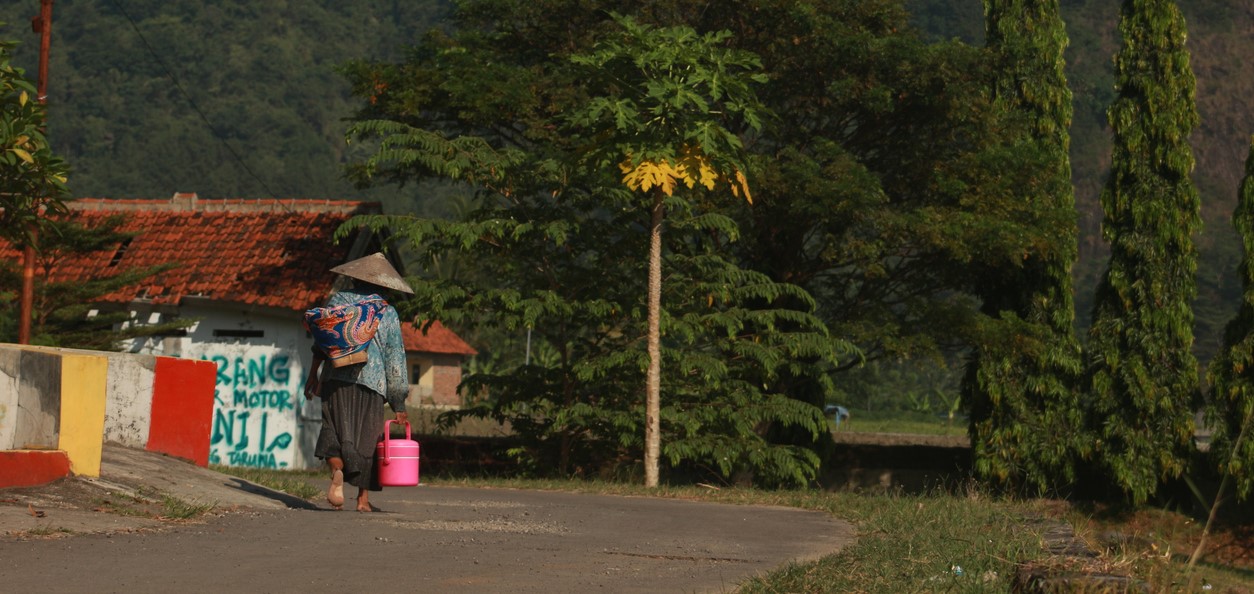
Ever walked down a village road in the morning and suddenly caught that sharp smell of smoke? Behind the calm, green views of rural Indonesia, there’s something we often overlook: little clouds of smoke coming from people burning their trash in the open. For many communities, burning waste is the most affordable and practical method of household and agricultural waste management. Yet, lurking behind this seemingly expedient disposal of waste lies a silent but formidable health threat that jeopardises our hearts and lungs.
As a lecturer and public health researcher currently pursuing my PhD, I have been moved by this phenomenon in my research. This journey was not only about crossing continents to the United Kingdom but also about diving into the depths of statistical data to find solutions for public health at home.
The Reality on the Ground: Between Smoke and Non-Communicable Diseases
My doctoral research focuses on strengthening primary health care (PHC) services, known in Indonesia as Puskesmas, in managing Non-Communicable Diseases (NCDs) by involving community health workers. Specifically, I am evaluating interventions for cardiovascular disease and Chronic Obstructive Pulmonary Disease (COPD) among populations exposed to air pollution in rural East Java, Indonesia. We often attribute heart disease or hypertension to lifestyle choices like smoking or a lack of exercise. However, air pollution from open waste burning and the use of solid fuels like wood or charcoal for indoor cooking are real and often overlooked risk factors.
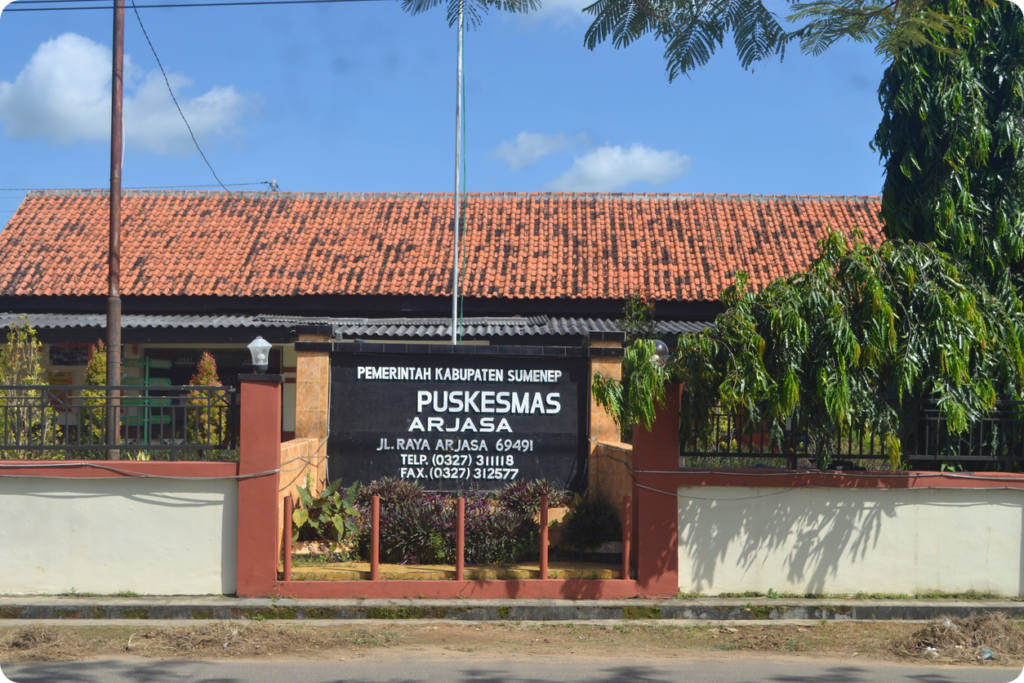
Our Puskesmas work hard through routine community screenings to detect and manage NCDs as early as possible. Unfortunately, the reality on the ground presents a multilayered challenge. Many patients with hypertension are reluctant to seek routine check-ups or receive adequate treatment.
At the same time, burning waste remains a social norm due to economic factors and ease of access. This complexity is further compounded by individual risk factors that are difficult to control without a strong support system. To better understand how health interventions can work more effectively in this environment, I am conducting a longitudinal study following 3,000 people over the course of one year across 12 villages in East Java. It is here that a major challenge in research arises: the problem of missing data.
Why “Missing Data” is Dangerous?!
Imagine you are assembling a 1,000-piece jigsaw puzzle of a beautiful landscape, only to find that 100 pieces are missing. You might still see the general outline of the picture, but crucial details, such as a person’s face or a primary object in the background, could be lost or distorted. In large-scale health research involving thousands of people over a long period, these “missing pieces” or missing data are inevitable. Participants might miss a scheduled appointment, move house, or technical issues might occur with measuring devices during the collection of biomarkers.
A common mistake made by researchers is deleting this incomplete data, which can lead to biased and inaccurate results. If missing data is not managed correctly, our research conclusions could be misleading, eventually resulting in health policies that miss the mark. Yet, if we manage, these “data holes”, they can actually be mended to improve the quality and robustness of our research analysis.
A Mission to Manchester: Learning the Art of “Mending” Data
The urgent need for advanced data management skills led me to be awarded the NIHR Global Health Research Short Placement Award for Research Collaboration (SPARC). Throughout September 2025, I had the privilege of studying at the Cathie Marsh Institute for Social Research at the University of Manchester, a highly respected institution in the world of social research and statistics.
During my time there, I received intensive mentorship from two exceptional experts. I was supervised by Prof. Arkadiusz Wiśniowski, an expert in modelling complex social processes, and Dr. Asri Maharani, an expert in advanced statistics with extensive experience in longitudinal data analysis. Through this collaboration, I delved into a technique known as multiple imputation. Simply put, instead of throwing away empty data points, we use statistical methods to fill those gaps based on patterns found in the other available data. This ensures that every piece of information collected from the community is utilised.
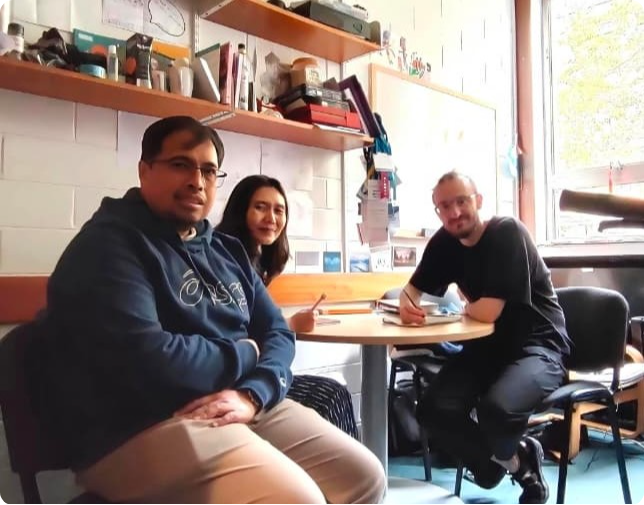
From left to right: Harun Al Rasyid, Dr. Asri Maharani, Prof. Arkadiusz Wiśniowski
To ensure this technique could be applied effectively in Indonesia, I tested the method using the Indonesian Family Life Survey (IFLS) dataset. This dataset is a “giant laboratory” covering over 80% of the population in western Indonesia and shares very similar characteristics with my PhD research data. By drilling through with data that reflects the complexities of our own population, I became more confident that upon my return, this knowledge could be directly applied to strengthen future health research in Indonesia.
The Take-Home Message: Do Not Rush to Discard Data
The experience of the SPARC programme provided one vital message that I wish to share with fellow researchers or anyone working in data management: do not be in a hurry to discard incomplete data. The ability to manage missing data through techniques like multiple imputation is not just about statistical sophistication; it is about the integrity of the research results.
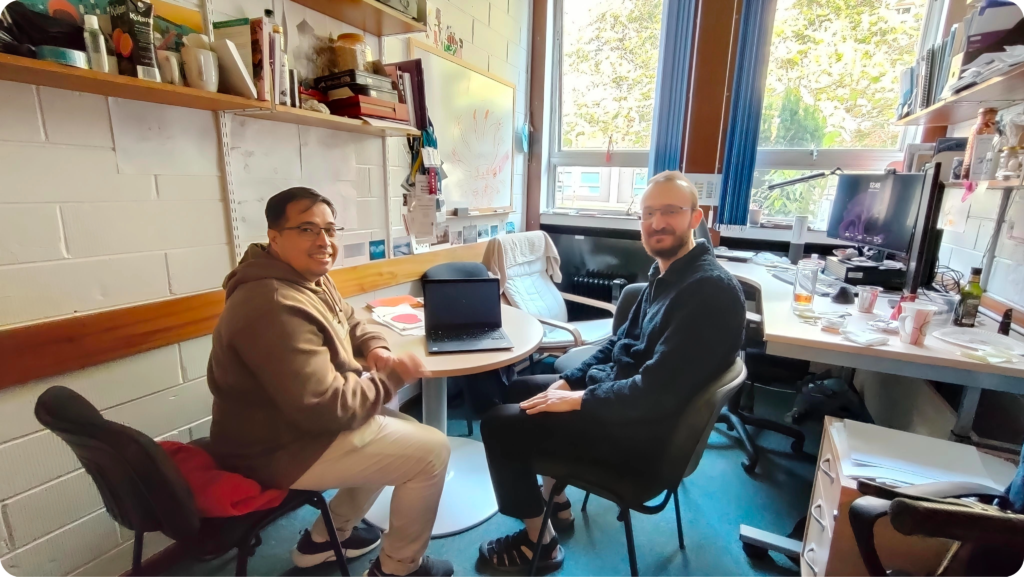
From left to right: Harun Al Rasyid, Prof. Arkadiusz Wiśniowski
By ensuring our data is whole, we are championing accuracy so that research findings reflect the true reality. Furthermore, this is a form of inclusion. We ensure that the voices and conditions of research participants with incomplete data are still “heard” and accounted for in the final analysis. Ultimately, robust data processing provides a solid foundation for the government to draft public policy, whether in air pollution control or the optimisation of Puskesmas services. This craft is crucial in today’s era of big data, yet unfortunately, it is not yet widely taught in depth in Indonesia.
My month-long journey in Manchester has provided me with a new lens through which to view data. With more accurate analysis, I hope my research on the impact of air pollution can make a tangible contribution to improving health policy. We ought to treat every piece of data with greater wisdom, because behind every number and every empty gap, there is a story about the health and future of our society that we must tell honestly.

——————————————————————–
This blog has been written by Harun Al Rasyid.
About the author:
Harun Al Rasyid- Harun is a lecturer and public health researcher at the Faculty of Medicine, University of Brawijaya, Indonesia. Currently, in the NIHR Global Health Research Centre for Non-Communicable Diseases (NCDs) and Environmental Change, Harun is focusing on strengthening primary health care (PHC) and essential public health services in Indonesia. He is working on developing sustainable solutions to help prevent non-communicable diseases in high-risk communities. Harun’s work evaluates how primary healthcare interventions can help address the rising burden of NCDs linked to air pollution exposure in Indonesia.
This research was funded by the NIHR (Global Health Research Centre for Non-communicable Diseases and Environmental Change) using UK international development funding from the UK Government to support global health research. The views expressed in this publication are those of the author(s) and not necessarily those of the NIHR or the UK government.