This is the second entry in a series of Research In Action conversations with Asri Maharani, Madhuri Dutta, and Sarah Iqbal
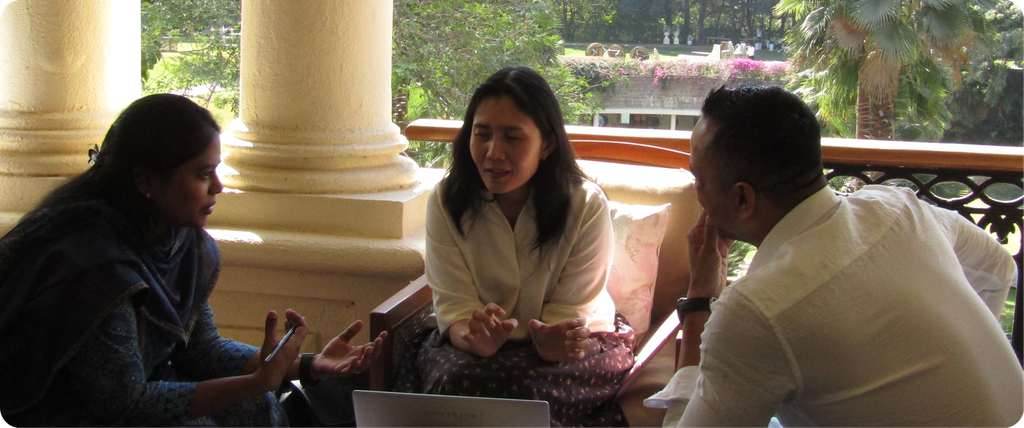
Research managers Madhuri Dutta and Sarah Iqbal in an insightful conversation with Asri Maharani bring to light the vital role of research management in fostering collaboration and facilitating the dissemination of knowledge. Their discussion, drawn from personal experiences, reveals the extensive and evolving responsibilities that research managers fulfill. Underscoring the critical importance of trust among research managers, researchers, and institutional leadership, while also advocating for innovative approaches to research communication and management that adapt to today’s dynamic landscape.
The dialogue explores the exciting innovations and creative synergy between researchers and research managers that can elevate and boost research impact across geographies.
Madhuri Dutta:
Many years ago, I conducted a small study on LinkedIn because I was curious about the different roles that research managers hold. I was amazed to see the variety of work encompassed by the title. Some individuals handle intellectual property regulations, while others focus on ethics or patient advocacy, yet all identify as research managers. It’s not only about the pre-award support we provide or fitting into designated boxes; research managers can also step outside these confines based on their interests. This is what I find fascinating about research management.
Having said that, Research management is still not a recognised profession in India. Most research managers transition into diverse roles on the job within their parent institutions where they understand the research aspects and the research focus of the institute, to keep themselves engaged in their work.
Both leadership and an institutional culture that promotes research managers in a supportive role contribute to a research manager’s growth while also building institutional capability. Speaking for myself, over the course of eight years, I’ve held four different positions. I started as a research manager, setting up the research office. I also worked with the Ethics Committee, gaining insights into their perspectives on ethics. Then I became interested in research operations. When the support divisions of the research management office- data management, statistics, and research operations- were consolidated, I took on a role that connected these units. Eventually, I moved on to focus on research partnerships for the institution and commissioned research. My experience at the Institute has been shaped not only by my skill set but also by my interests and drive to advance.
In most institutions and organisations, there are defined roles for research managers. I don’t think that is a bad approach; it is important in its own way. Some people manage only the research office and the research management roles without diversifying as much as I have. What is primarily important is the trust that a research manager builds, not just with researchers, but also with the organisation’s leadership. This trust is crucial for the various roles a research manager can take on over time.
Anyone interested in management should certainly give it a try; it’s a unique and exciting profession. No two days are alike, and each day presents new challenges. If you possess the adaptability to face different challenges daily, it can be very rewarding. At the end of a competitive application cycle, when a researcher wins that award, it’s like a victory for us as well.
Asri Maharani:
The RMA’s involvement has also evolved significantly over the years. I can see how the dynamics have changed and shifted over time, even in my own experience.
When I first started applying for funding, around ten or eleven years ago, I felt the relationship was more transactional. At that time, I would typically involve the research managers only after I had a complete draft of my proposal. I believed they were primarily there to check compliance, review my budget, and obtain signatures for submission. I rarely considered how they could contribute to shaping the strategy of the application itself.
My communication with them mainly consisted of emails with attachments, such as my proposal and budget in Excel format. They would provide feedback on the budget, and then we would submit the application.
“However, my approach and my relationship have changed, and now I collaborate with them much earlier in the process. Even before the funding call is officially confirmed, I discuss ideas with them.”
They are aware that certain funding calls occur every three or four months, which allows for proactive planning. I can conceptualise an idea and seek their input on whether it fits the funding requirements or not.
At the University of Manchester, we have a platform called PURE, which is essential for our communication about proposals. This platform not only facilitates budget discussions but also helps coordinate the involvement of co-applicants and other institutions. This also enables the RMA team to see how the project develops from the early stages of application. After discussing with them, if we determine we are not ready to apply, we can postpone our submission or wait for the next funding call.
Now, we hope to provide young researchers with a better experience and more knowledge about these processes. To support this, we have established incubator workshops for young researchers, particularly those who are new in roles like research associates or lecturers. These workshops also focus on grant writing and involve practical topics. The RMA plays a crucial role in these workshops, as they connect many people and facilitate these collaborative efforts.
Sarah Iqbal:
The research management landscape for post-award activities has also evolved in recent times. It has presented a vital role for research managers to step into.
Traditionally, researchers would complete a project, publish a scientific paper, and then move on to the next project. However, funders are now increasingly requesting alternative research communication methods that reach a broad range of audiences, not just academic peers. It’s a significant shift in the format of knowledge dissemination. Looking at researchers at different stages in their careers, senior researchers often have more opportunities to present their work at conferences. In contrast, younger researchers typically have fewer opportunities for formal academic engagement but with the rise of digital media, they can create new routes for knowledge sharing.
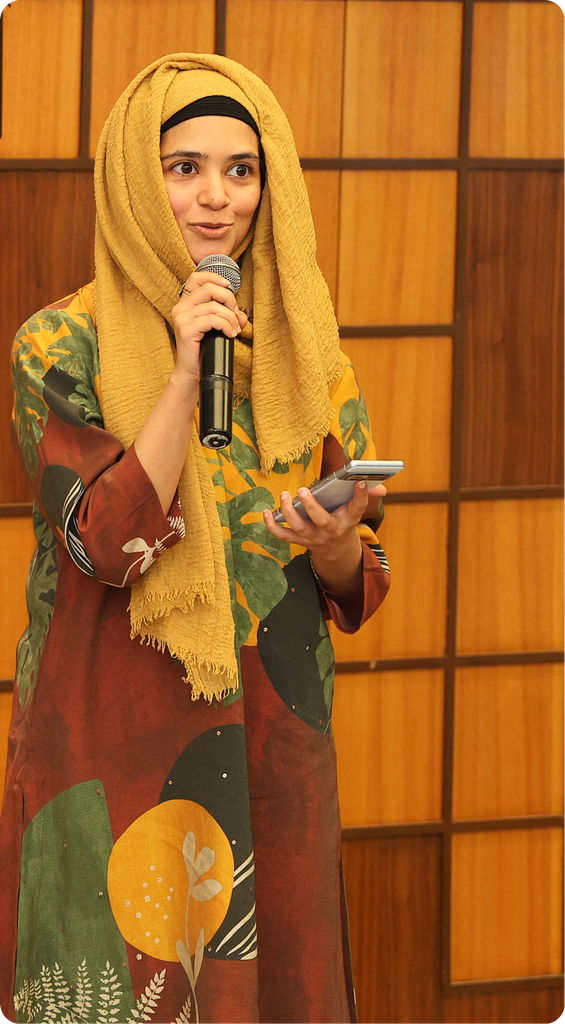
When I work with early career researchers, many are eager to develop outputs based on their work, whether it’s a field study, a new finding from their data analysis, or a brief communication to share their results. This output can serve both the academic community and the general public. I have noticed a conscious shift among researchers toward discussing their findings and disseminating their research through non-traditional methods. This shift is often funded or mandated by agencies and has been further accelerated by the rise of social media, which has made alternative pathways necessary.
As a part of my role in knowledge management for the NIHR GHRC, I strive to support these individuals in adapting to new dissemination methods. Some are receptive, while others may struggle. Early career researchers are typically the most eager to embrace these alternative methods and produce shareable content. Sometimes, even mid-career or senior researchers also approach the research management office for guidance on alternative ways to share their work and foster younger team members to convey the research impact effectively.
Stay tuned for more on that in the next entry. Read the first entry in this series of Research In Action conversations here…
Read the third and last installment of this series, coming up on 16th October.
——————————————————
This is an edited transcript of a conversation between Asri Maharani, Madhuri Dutta, and Sarah Iqbal.
About the speakers:
Asri Maharani: Asri is a Senior Lecturer in Public Health and Epidemiology at The University of Manchester. Her work focuses on the intersection of environmental and mental health, exploring how air pollution and plastic burning contribute to non-communicable diseases and mental health. Dr Maharani brings her invaluable experience as a practising physician to her study of public health challenges and how their solutions can aid communities. Her work examines how health systems can help combat the adverse effects of plastic burning through early detection, public education, and preventive care in vulnerable communities.
Madhuri Dutta: Madhuri is the Head of Strategic Partnerships and Commissioned Research at the George Institute for Global Health. With over sixteen years of experience as a Research Manager and Administrator (RMA), she has supported researchers in various areas, including grants management, data management, capacity-building activities, and quality assurance. In her current role overseeing strategic partnerships at the Institute, Madhuri leads academic and research partnerships, as well as research projects with multilateral organizations.
A fellow of the Wellcome Trust/DBT India Research Management Initiative (IRMI), Madhuri is also an Editorial Member of the Journal of Research Management and Administration (JoRMA). Additionally, she has co-authored chapters in The Emerald Handbook of Research Management and Administration Around the World. She is also one of the co-founders of the Indian Network of Program and Research Managers and Administrators (INPARMA), a network created for and by Indian Program Managers and RMAs.
Sarah Iqbal: Sarah is the Research Manager at the George Institute for Global Health, India. She also spearheads the knowledge management at the NIHR Global Health Research Centre for Non-communicable Diseases and Environmental Change. A PhD in Biochemistry and with over six years of experience as a research manager, Sarah Iqbal works closely with researchers and the communications team.
This research was funded by the NIHR (NIHR203247) using UK international development funding from the UK Government to support global health research. The views expressed in this publication are those of the author(s) and not necessarily those of the NIHR or the UK Government.