

This is the first entry in a series of Research In Action conversations with Asri Maharani, Madhuri Dutta, and Sarah Iqbal
Research administrators are essential to the grant application process for research projects, providing clear guidelines, detailed budget templates, and subrecipient commitment documents that streamline the process. They ensure compliance with funding agency requirements, empowering researchers to successfully secure funding for their innovative projects.
A common misconception, however, is that this is the end of the road. That the involvement and support of the Research Managers & Administrators end with the submission of the application. This Research Administrator Day, research managers Madhuri Dutta and Sarah Iqbal sit down for a candid conversation with Asri Maharani to illuminate the enduring support and dynamic ecosystems that research administrators cultivate to foster impactful research.
Asri Maharani: In my time at the University of Manchester, I received considerable support from the research administration team. Their support goes beyond the proposal phase. Once funding was secured, they continued to assist with the administrative tasks involved in setting up and delivering the project, allowing me to focus on conducting the research itself. This has been invaluable throughout my experience.
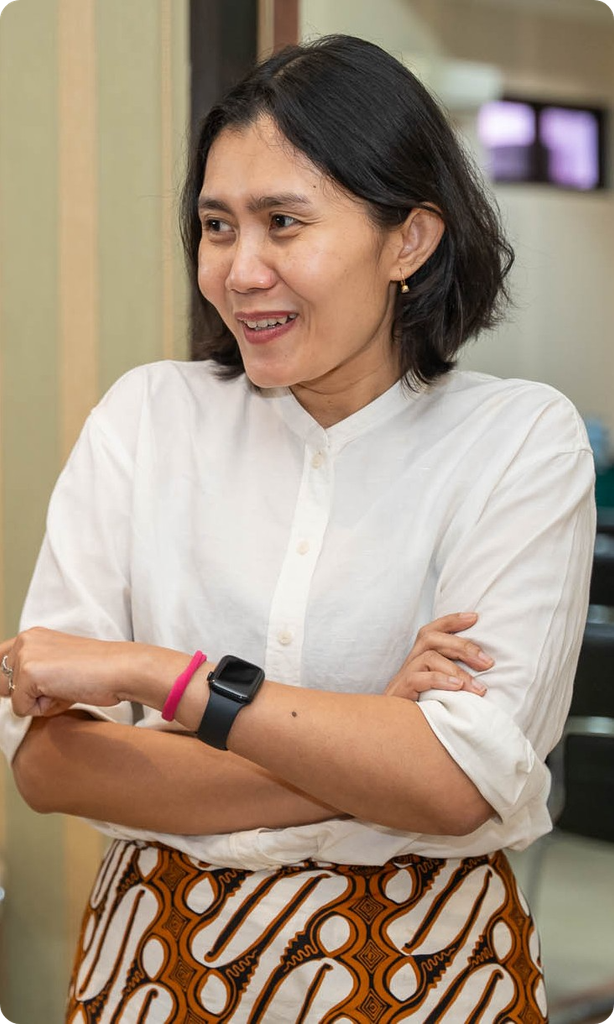
During grant application, one of the key areas of support was their ability to translate the specific language used by funders. Grant applications often contain specific terminology that can be difficult to interpret. The team at the University of Manchester was able to clarify these terms, helping me understand exactly what was required. They pointed out what aspects of the proposal were negotiable, and which were non-negotiable.
The University has experts in budget and costing support, which is especially useful when managing multi-partner budgets. When I applied for the EU Horizon grant, for instance, I collaborated with twelve partner institutions from four different continents, each with its own unique requirements. Their expertise allowed them to liaise with each institution regarding budget discussions and offer me vital support. Without this level of expertise, I believe it would have been exceedingly challenging to accurately budget for the project, particularly with limited funding. The team also provided suggestions for costing, allowing me to make informed decisions while considering their recommendations.
Another valuable form of support I received, albeit less tangible, was their advocacy and assistance with risk management. For example, if a partner were to drop out or if the project timeline shifted, the team would handle the paperwork and help me manage communications with the partner institutions and funders. They also worked alongside us to maximise each institution’s strengths. For example, in a research project focused on integrating healthcare systems, they highlighted specific faculties, such as the Computer Science department at another institution, that could contribute effectively. They facilitated connections with these faculties and ensured I was aware of the unique strengths available across different universities. Their understanding of different universities’ administrative processes was vital to the progress of my research.
Madhuri Dutta: Connecting the dots around the research life cycle. That is the crucial role the research management office plays.
Let’s consider the stages of the research life cycle. It begins with the pre-award phase, where researchers explore funding opportunities and submit competitive applications. Once an award is secured, compliance, ethics, contracting, budgeting, and recruitment come into play. All of these are essential towards operationalising a research project. Following this, as the research progresses, dissemination of findings takes place along with the sharing of funding reports. All these stages are interconnected in a cycle.
RMAs serve as the connective tissue that keeps the research cycle from breaking because it is a continuous, interconnected loop.
Establishing research management systems and processes: A research office creates online systems for easy pre-award processing aligning with institutional regulations. They also oversee that all projects are conducted with due national compliance and approvals from regulatory authorities.
Liaising with other support divisions: Now, where does the research office fit in? The research office connects various divisions involved in the research life cycle and has the primary goal of simplifying the research management process for researchers. To support researchers so that they can best focus on what they do best. Researchers might struggle with the myriad terminologies across departments. As Asri mentioned, research managers simplify the technical jargon and effectively communicate across the different groups (HR, finance, researchers) about the importance of certain processes and guidelines.
Building internal research collaborations: Additionally, the research office has an oversight role in all research activities within an organisation. For example, when Asri mentions exploring inter-institutional collaborations, the research office has the knowledge of who is conducting what research since they work across teams and have an overview of the impact of those programs within the institute. Hence, they can easily bring together researchers with complementary skills within an organisation.
Developing external partnerships: The research office brings everything together. They handle application related queries and provide guidance even on how to budget creatively. They also communicate with funders to clarify any uncertainties researchers may have about specific clauses. Furthermore, the office gathers data for institutional reporting and works closely with the impact and engagement team. A research office also strengthens external collaborations and partnerships relevant to the research mission of the organisation.
Providing strategic inputs: Research offices often manage and analyse data on funding, projects, and their impact that helps the institution to make strategic decisions. The research office at George Institute also conducts research prioritisation exercises that are beneficial to the organisation.
Most research institutions in India don’t have a dedicated research office. As a result, young faculty members, such as Assistant Professors, often find themselves performing the duties of a research manager in addition to their teaching and research responsibilities. If Asri had to manage everything alone without the support of a research office, she would struggle to maintain the quality and focus required for her research, for her technical work, which could undermine the standards of her organisation.
A research office offers more than just support. It also serves as an intelligence hub.
We, Sarah (Iqbal), Ariti (Dutta), and I, at The George Institute for Global Health, collectively understand which researchers are submitting highly competitive applications. This knowledge is key towards mentoring young researchers who can learn from more established groups. To amplify the impact of research within an organisation and to sustain it into the next generation of young researchers, it is necessary to utilise the data that we, as research managers, continuously collect.
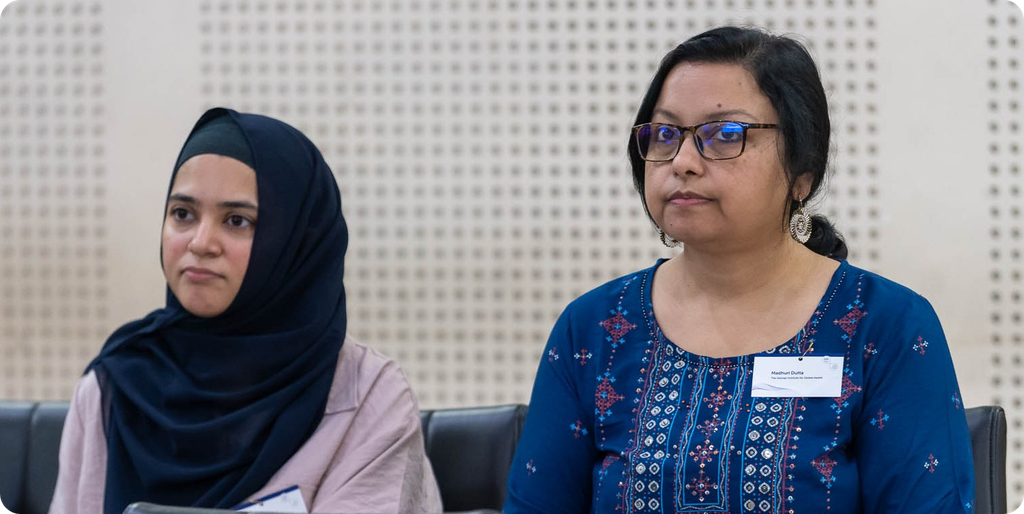
Sarah Iqbal: Working with young researchers is always very exciting. They come with fresh ideas and a lot of enthusiasm. There are, however, two important aspects that they might be unaware of.
Firstly, while they understand the competition and its timeline, they often lack insight into what it takes to develop a competitive proposal. This includes submitting it on the portal while simultaneously building their peer network and aligning with the funders’ requirements, which is a new process for them. This is where we need to provide significant support and guidance. We usually budget extra time to assist individuals who are applying to a particular competition for the very first time. As Madhuri mentioned, there’s a lot of groundwork we, the research office, do within the George Institute.
We start communicating with early career researchers well before they begin developing their first application. We try to identify those who are interested in writing or submitting an application for funding the following year. We then initiate conversations with them, informing them about potential funding schemes they may apply for. Sometimes, we also advise them on possible collaborators or mentors for their applications, based on our knowledge of senior researchers within the organisation who are willing to explore specific areas.
In addition to these discussions, we have structured workshops designed for early career researchers. One such initiative is the grant writing workshop, specifically tailored for those drafting their first applications. This workshop guides them through the entire application cycle, from formulating a research question to writing the concept note, and includes discussions on methodology, potential collaborators, costing guidelines, and submission schemes. It is an intensive two-week program that features active sessions with senior researchers mentoring junior researchers. This program is completely conceptualised and facilitated by the research administration department at the Institute.
Secondly, while seasoned researchers are generally more aware of the process and the support that the research management office offers, when working with young researchers, I often find myself having to guide them and inform them about the support services available. Many of these newer researchers are not familiar with the research support department or unit and may view it as a new offering, especially if they have not been at the Institute for long. Research support services are not available at all organisations across different research institutions and universities, after all. So, we plan awareness sessions for new hires to introduce them to our research services. We start by discussing the support unit in general and emphasise that we are the point of contact for developing an award. We remain their point of contact once they receive the award, guiding them through the post-award requirements, including activating the grant, aligning with the funder(s), and managing reporting timelines.
As researchers continue their journey, their relationships with RMAs evolve and deepen, reflecting a growing partnership. But more on that in the next entry.
Read the second installment of this series here…
——————————————————
This is an edited transcript of a conversation between Asri Maharani, Madhuri Dutta, and Sarah Iqbal.
About the speakers:
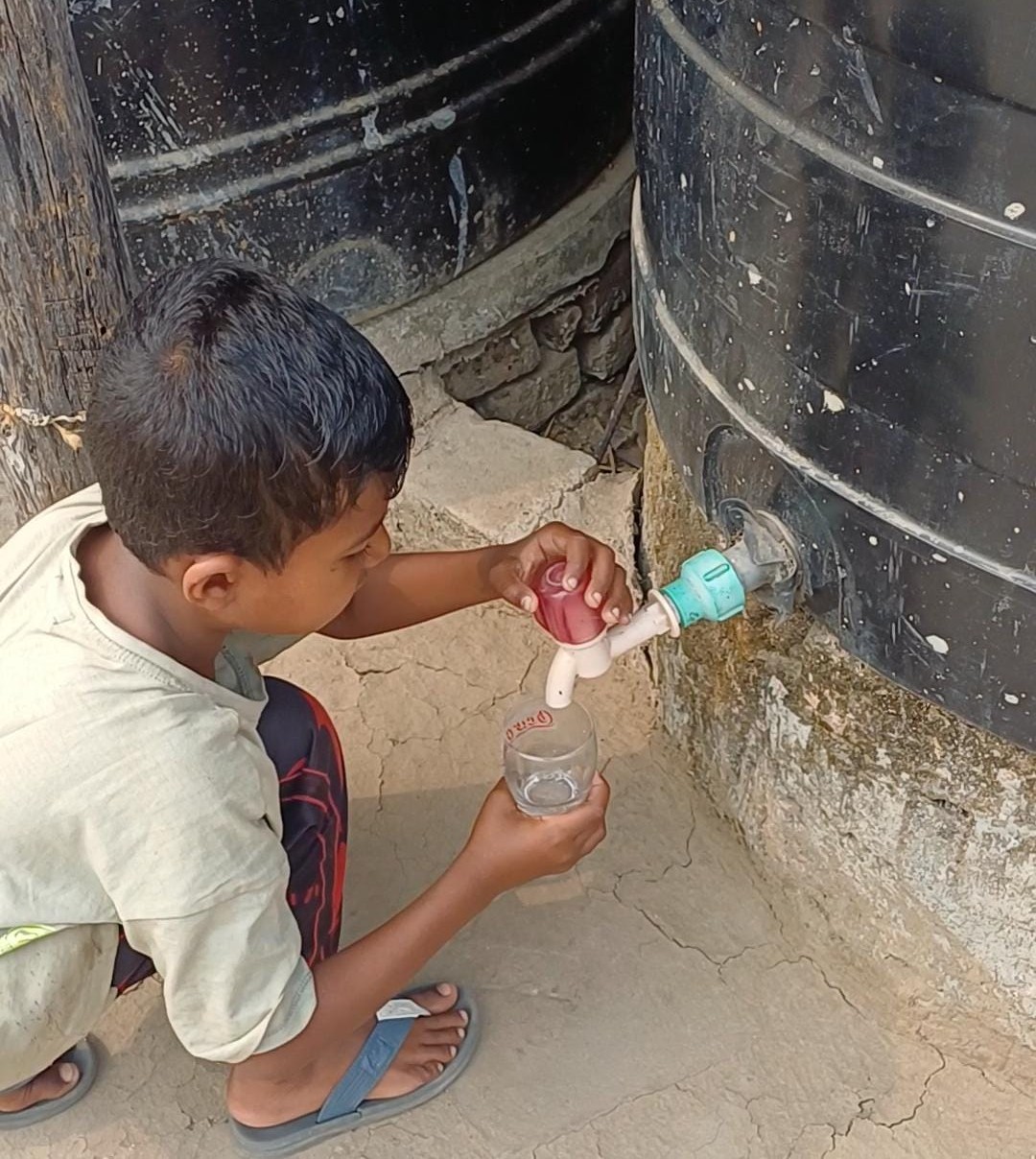
Asri Maharani: Asri is a Senior Lecturer in Public Health and Epidemiology at The University of Manchester. Her work focuses on the intersection of environmental and mental health, exploring how air pollution and plastic burning contribute to non-communicable diseases and mental health. Dr Maharani brings her invaluable experience as a practising physician to her study of public health challenges and how their solutions can aid communities. Her work examines how health systems can help combat the adverse effects of plastic burning through early detection, public education, and preventive care in vulnerable communities.
Madhuri Dutta: Madhuri is the Head of Strategic Partnerships and Commissioned Research at the George Institute for Global Health. With over sixteen years of experience as a Research Manager and Administrator (RMA), she has supported researchers in various areas, including grants management, data management, capacity-building activities, and quality assurance. In her current role overseeing strategic partnerships at the Institute, Madhuri leads academic and research partnerships, as well as research projects with multilateral organizations.
A fellow of the Wellcome Trust/DBT India Research Management Initiative (IRMI), Madhuri is also an Editorial Member of the Journal of Research Management and Administration (JoRMA). Additionally, she has co-authored chapters in The Emerald Handbook of Research Management and Administration Around the World. She is also one of the co-founders of the Indian Network of Program and Research Managers and Administrators (INPARMA), a network created for and by Indian Program Managers and RMAs.
Sarah Iqbal: Sarah is the Research Manager at the George Institute for Global Health, India. She also spearheads the knowledge management at the NIHR Global Health Research Centre for Non-communicable Diseases and Environmental Change. A PhD in Biochemistry and with over six years of experience as a research manager, Sarah Iqbal works closely with researchers and the communications team.
This research was funded by the NIHR (NIHR203247) using UK international development funding from the UK Government to support global health research. The views expressed in this publication are those of the author(s) and not necessarily those of the NIHR or the UK Government.