
This is the third and final entry in a series of Research In Action conversations with Madhuri Dutta and Sarah Iqbal
The dynamic domain of research management thrives on practical experience integrated with knowledge sharing. Research managers Madhuri Dutta and Sarah Iqbal, in an engaging dialogue, explore the critical role mentorship plays in cultivating the skills of emerging research administrators while highlighting the established associations in high-income countries and promising initiatives in India, such as INPARMA, that are building ecosystems that foster invaluable knowledge exchange.
Their discussion brings to light with startling clarity the inclusive nature of the domain itself and the indispensable attributes of research management that nurture innovative solutions and impactful research outcomes.
Madhuri Dutta:
Research management is a highly experiential job, and it relies heavily on hands-on experience. While some principles can be taught, many aspects of the role are learned through practice and understanding.
To create a lasting legacy in this field, it is essential to mentor younger research managers, helping them gain experience and enhance their skills. A professional network therefore becomes very important.
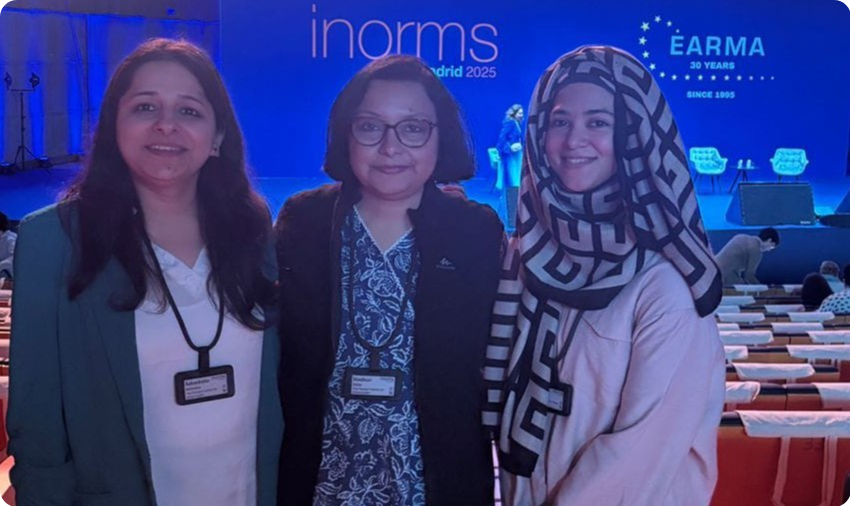
In high-income countries, formal research management associations serve this function and can help young research managers understand the field and facilitate resource sharing. Research management associations in the USA, Canada, the UK, and Europe are all well established and serve as important networks. In Asia, Japan has its own association, and recently in India, we’ve initiated one as well.
I am one of the founding members of the Indian Network for Project and Research Managers and Administrators (INPARMA).
The purpose of this association is to unite research managers in India, fostering a legacy of shared knowledge about what each of us does across various organisations. We aim to support each other with training and share information about courses available at different institutions in research management. A key area we wish to develop is the cultivation of a pool of research managers and administrators in Tier 1, Tier 2, and Tier 3 cities.
I encourage anyone interested in this profession, especially early-career research managers, to explore INPARMA and other international associations to learn more about their work and available training opportunities. Ultimately, our collective goal as research managers is to leave behind a meaningful legacy.
Sarah Iqbal:
I would like to add to what Madhuri has said. Madhuri spoke about the national context regarding the group of research managers and project managers who will advance this profession by creating a network. I believe that funding initiatives like the NIHR-GHRC Centre grant also provide opportunities for research managers from different regions to come together and learn from one another.
This is something we have attempted within the Centre by establishing a community of practice. This community was an informal association of members from various countries who gathered to discuss all aspects of research management. The structures within each of these countries differ significantly; some have formal research manager roles, while others do not have those designations established. However, we were able to communicate with one another, discuss challenges, and streamline some research management requirements to unify our efforts over the five years we have been active.
For large grants with multiple teams bringing various expertise and working in different contexts, it is crucial to share knowledge with each other. The Tacit Knowledge sessions were one experiment we initiated within the Centre, aiming to bring team members together to collaboratively address different problems and develop approaches to overcome research challenges.
These Tacit knowledge sessions were held in person during our annual symposium and also intermittently every six months through virtual meetings. I believe this was an effective way to foster collaboration among team members from different organisations.
Madhuri Dutta:
There is a growing recognition of the importance of research managers by funding organisations. They are beginning to understand the need for a central point of contact or a designated individual to manage collaborative, multi-institutional projects.
The Anusandhan National Research Foundation (ANRF), which is the largest government funding agency in India, now requires a dedicated program manager or project manager for its multi-institutional collaborative grants. This person will address not only the challenges faced by single institutions, such as finance or human resources, but also coordinate the overall efforts of the grant to ensure that deadlines and timelines are met.
These are small steps, especially considering that research management is not yet recognised as a profession in India. However, we are seeing increasing involvement from individuals who can centrally coordinate efforts due to institutional leadership and the recognition of these needs by funding organisations.
In fact, it was the Wellcome Trust/DBT India Alliance that launched the first Indian research management initiative. Their vision was that for the significant funding they provide, there should be a research manager to coordinate these efforts across institutions. They established the Indian Network for Research Managers, known as IRMI, which provides supportive grants, travel grants, and fellowships for research managers throughout India. This initiative acknowledges the vital work that research managers do.
So far, much of the progress in recognising this profession in India is driven by funding organisations, as opposed to occurring spontaneously within institutions. A significant factor influencing this is the issue of resources. Since research management is an unrecognised profession, there is no dedicated funding pool for it. There is also a lack of understanding of the capabilities of research managers and the level of resources needed for these roles.
In the past twenty years, the Government of India used to provide direct funds to scientists in government organisations, which they utilised for technical purposes. Scientists were responsible for managing everything. However, as reporting requirements have evolved and funding sources have become more diverse, researchers have to spend a significant amount of their time on research administrative activities in addition to conducting their research and managing their teams.
This shift has created an opening for research managers in Indian organisations. As funding becomes scarcer and competition increases, there is a growing need for a specialised group of individuals who can identify funding opportunities, align them with institutional goals, and facilitate the grant submission process. Understanding what funding opportunities are available and how the team can effectively secure a grant requires dedicated research managers.
High-income countries grasp the value of research managers, with most universities abroad having established research offices. In India, however, while some reputable research-intensive institutions have research offices staffed with research managers, many universities are pressured by the University Grants Commission (UGC) to conduct original research but lack the internal capacity to develop research offices. INPARMA’s goal is to explore how we can establish this as a recognised profession that can thrive in various institutions across the country. This includes not only research-intensive institutions but also those that may not be as well-resourced by funders.
Sarah Iqbal:
Curiosity is perhaps the key. I’ve found that sometimes routine and repetitive tasks can lead to interesting insights and new connections to shape strategy. Pursuing those lines of inquiry can sometimes lead you to new pathways within research management and, at the end of the day, hold a research manager’s interest and motivate them.
Madhuri Dutta:
And discretion. Success in research management relies heavily on building relationships and liaising with other departments and not just solely on technical expertise. It’s essential to have some interest in the overall mission and work of the institute to thrive in that environment, but one must also operate from a core ethical integrity.
If someone has those qualities of curiosity and integrity, irrespective of their educational background (the arts, sciences, whatever they may be), they will find that the domain of research management offers great opportunities. It’s a very inclusive domain that fosters people from different backgrounds.
Read the first installment of the series here and the second here.
——————————————————
This is an edited transcript of a conversation between Madhuri Dutta and Sarah Iqbal.
About the speakers:
Madhuri Dutta: Madhuri is the Head of Strategic Partnerships and Commissioned Research at the George Institute for Global Health. With over sixteen years of experience as a Research Manager and Administrator (RMA), she has supported researchers in various areas, including grants management, data management, capacity-building activities, and quality assurance. In her current role overseeing strategic partnerships at the Institute, Madhuri leads academic and research partnerships, as well as research projects with multilateral organizations.
A fellow of the Wellcome Trust/DBT India Research Management Initiative (IRMI), Madhuri is also an Editorial Member of the Journal of Research Management and Administration (JoRMA). Additionally, she has co-authored chapters in The Emerald Handbook of Research Management and Administration Around the World. She is also one of the co-founders of the Indian Network of Program and Research Managers and Administrators (INPARMA), a network created for and by Indian Program Managers and RMAs.
Sarah Iqbal: Sarah is the Research Manager at the George Institute for Global Health, India. She also spearheads the knowledge management at the NIHR Global Health Research Centre for Non-communicable Diseases and Environmental Change. A PhD in Biochemistry and with over six years of experience as a research manager, Sarah Iqbal works closely with researchers and the communications team.
This research was funded by the NIHR (NIHR203247) using UK international development funding from the UK Government to support global health research. The views expressed in this publication are those of the author(s) and not necessarily those of the NIHR or the UK Government.