
When: July 2023- December 2023
Where: Virtual Sessions
Session Type: Participation via Expression of Interest
Organizing Institute: The George Institute for Global Health, India
Course Lead: Dr. Niveditha Devasenapathy, Head Academic Clinical Trials, The George Institute for Global Health & Research Capacity Strengthening Co-lead, NIHR Global Health Research Centre for Non-Communicable Diseases and Environmental Change
Co-tutors/Session Leads:
- Bijini Bahuleyan, Data Manager, The George Institute for Global Health, India
- Sindhu Prasad, Head of Research Systems & Technology, The George Institute for Global Health, Australia
- Dr. Yatirajula Kanaka Sandhya, Program Lead, Mental Health, The George Institute for Global Health, India
Course Brief:
The NIHR Global Health Research Centre for Non-communicable Diseases and Environmental Change facilitated a training course on the Fundamentals of Research Data Management. Masterfully led by Dr. Niveditha Devasenapathy, collaboratively taught by subject-matter experts, Bijini Bahuleyan, Sindhu Prasad, and Dr. Yatirajula Kanaka Sandhya, from The George Institute for Global Health.
The course enrolled 31 participants from Indonesia (University of Brawijaya), India (The George Institute for Global Health & Sri Ramachandra Institute of Higher Education & Research), and Bangladesh (International Centre for Diarrhoeal Disease Research). Delivered through the Global RT Moodle platform, the course featured twelve pre-recorded sessions, five live webinars, two face-to-face workshops, along with assignments designed specifically for the cohort, which included an assignment to develop a Data Management Plan (DMP) for a research project using a template shared by Dr. Niveditha Devasenapathy.
Download the template here…
Intended Learning Objectives:
- Recognize the importance of data management planning
- Reviewing the data collection tool with a critical lens
- Recognize key activities during planning, deployment, maintenance, and closure of a data capture system
- Plan and implement data quality control measures
- Describe key steps to ensure data security
- Identify key requirements for data sharing
Spanning over 16 hours, the training course offered valuable insights and knowledge. The valuable aspects of the training, according to participants, included:
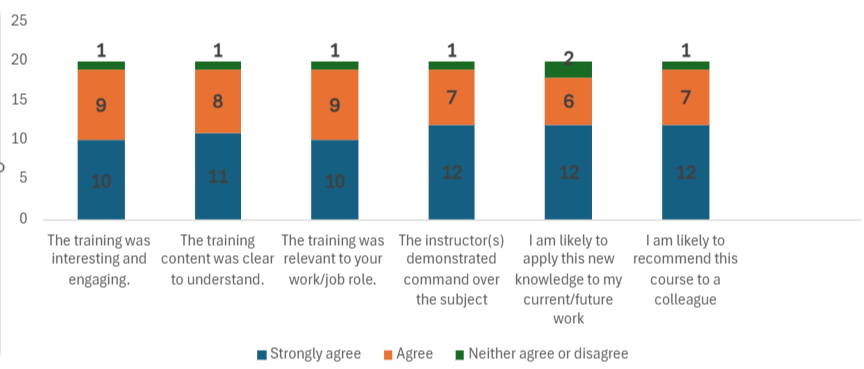
- Applicability of the data management plan template as a resource in different research projects
- Improved efficiency and reliability of research outputs
- Systematic approach towards designing data collection tools and database management
Introduction to Data Management
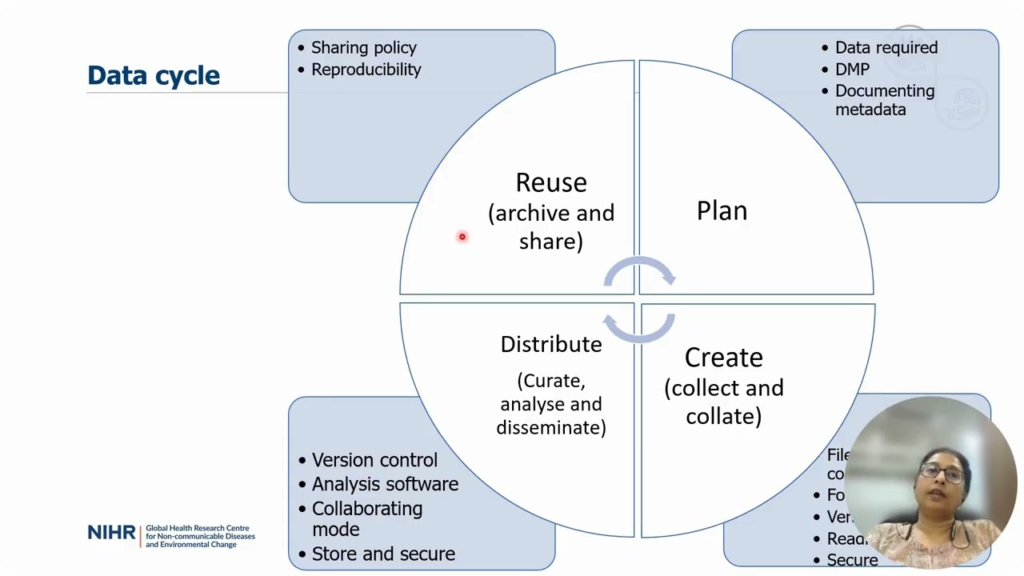
Join Dr. Niveditha Devasenapathy as she takes us through the foundational concepts of data management and how it can serve as a strategic tool for decision making in both policy formation and research practices.
Emphasizing the significance of resilient data management protocols, Dr. Devasenapathy highlights their role in ensuring research impact.
Factors Impacting Data Management
Dr. Niveditha Devasenapathy takes on the, at times, intimidating endevaour of developing data management plans for research projects. With a comprehensive analysis of the various factors that can impact data management, she walks us through a step-by-step guide of the key elements of data collection, storage, and a whole lot more.

Introduction to REDCap
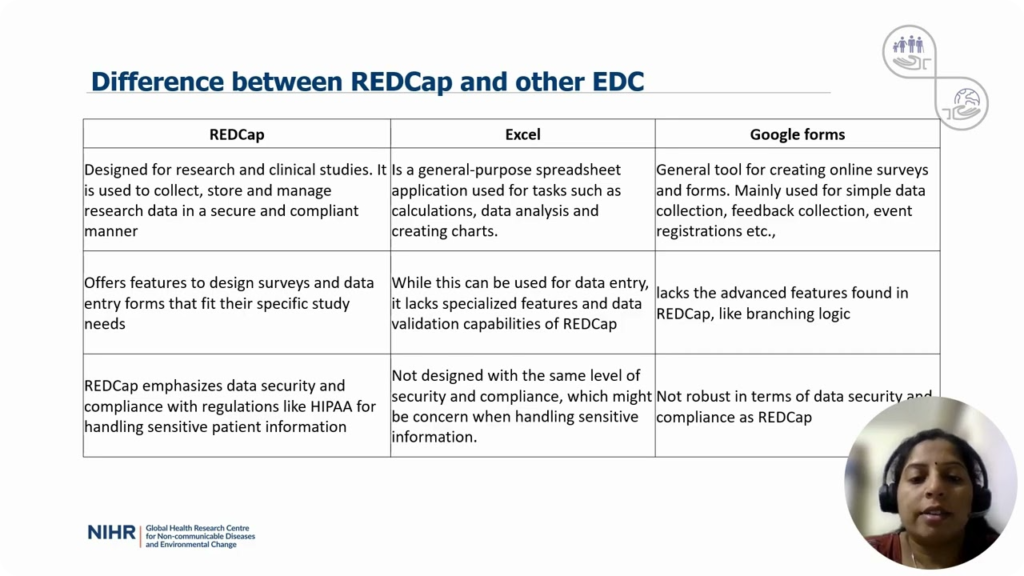
Join Bijini Bahuleyan as she compares and contrasts the different Electronic Data Capture (EDC) tools used in data management.
REDCap from an End User’s Perspective
Bijini Bahuleyan walks us through the user interface of REDCap, its different features and functionalities.
Highlighting its critical value in establishing and maintaining open lines of communication between project teams and site staff & data collectors, especially for research studies being conducting in remote areas with limited internet connectivity, while ensuring security and privacy compliance.
REDCap from a Designer’s Perspective
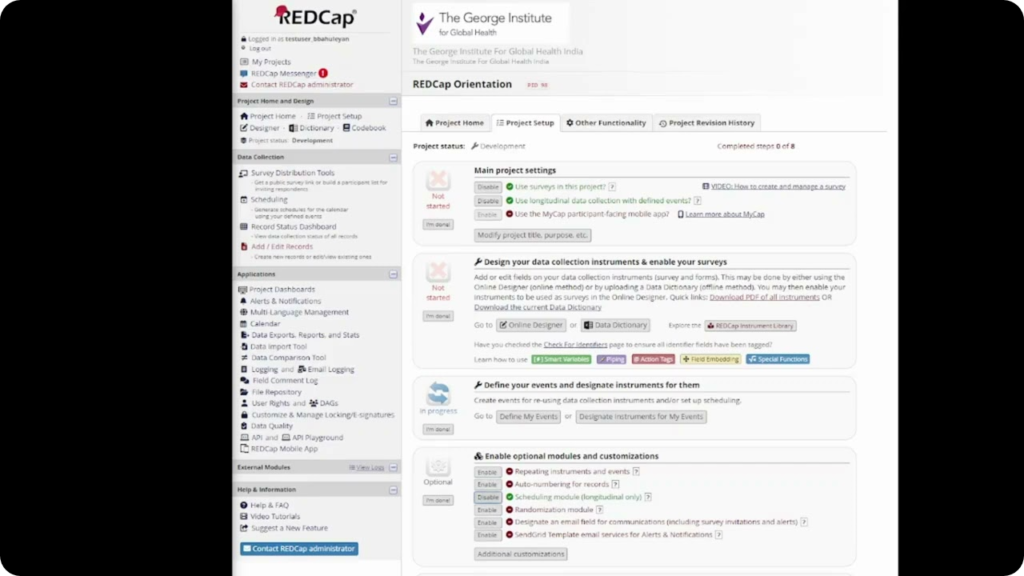
Join Bijini Bahuleyan as she expertly navigates the designer interface of REDCap, showcasing its powerful features and user-friendly design. The different data requirements of various research projects are brought to the fore as Bijini takes us through the process of designing a centralised database.
Questionnaire Development | Part 1 | Data Collection Tools
In Part 1 of Questionnaire Development, Dr. Niveditha Devasenapathy discusses a structured approach to minimize data loss and improve the analyzability of data.
Breaking down the different collection tools for primary data, Dr. Devasenapathy calls attention to the challenges that researchers might face when developing questionnaires and offers viable solutions that can help overcome those challenges.
Questionnaire Development | Part 2 | Steps towards Developing a Questionnaire
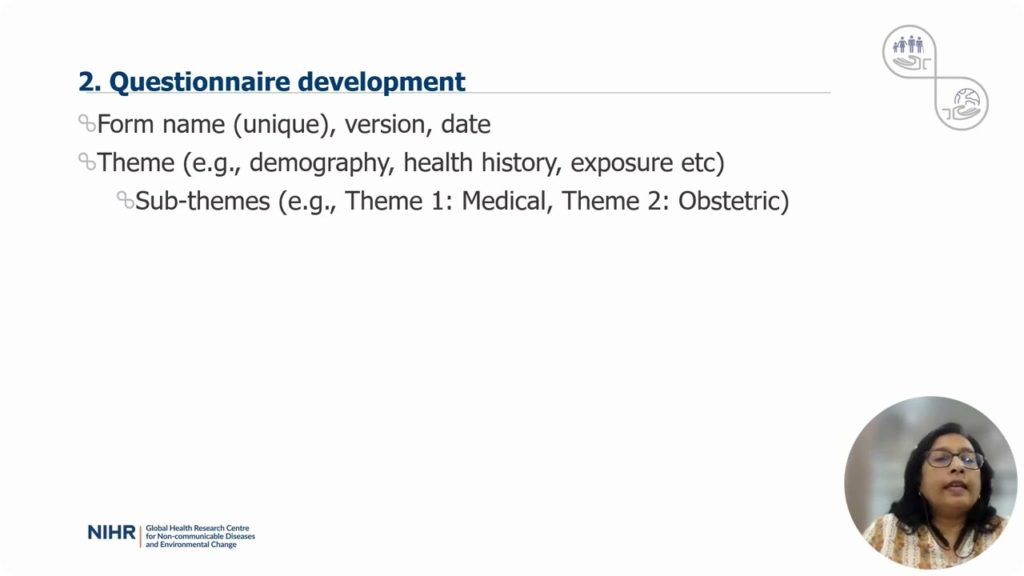
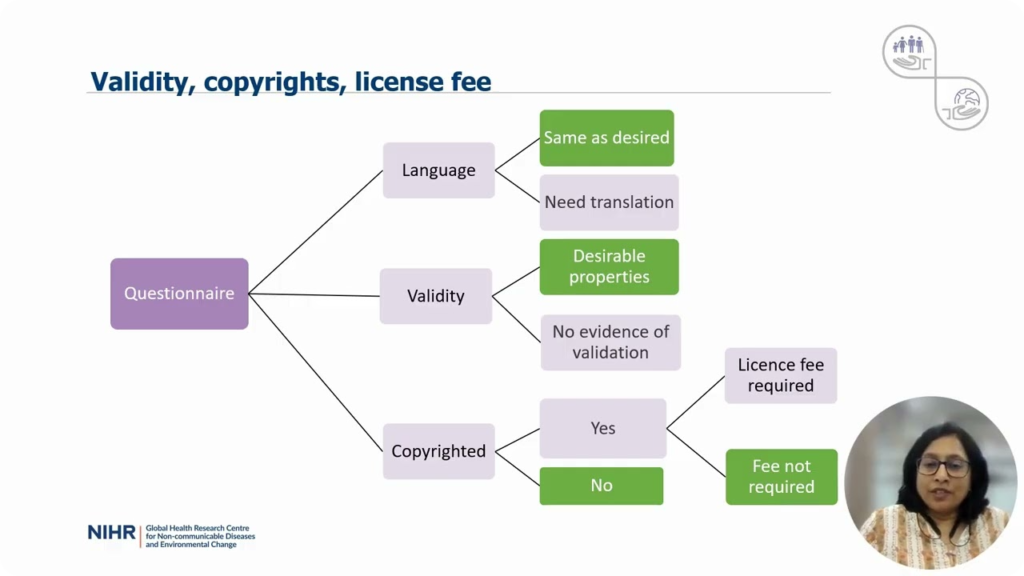
Charting a roadmap towards designing a meticulous data collection tool, Part 2 of Questionnaire Development, led by Dr. Devasenapathy covers comprehensive ground towards creating a questionnaire. A definitive how-to guide for researchers to ensure efficient data capture and management while minimising information loss, irregularities, and errors.
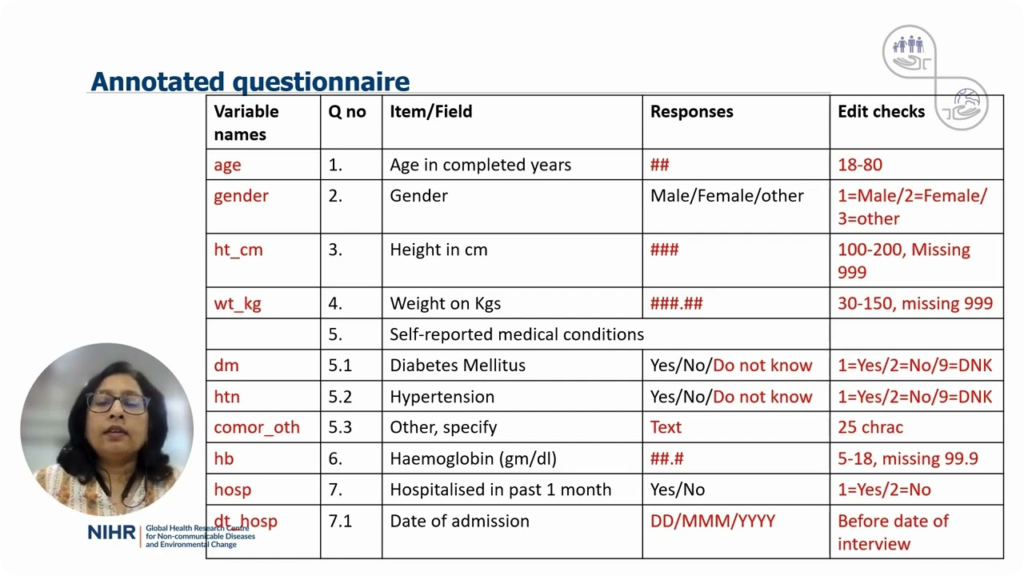
Questionnaire Development | Part 3 | The Role of the Researcher
Delve into the role of a researcher in developing a database for questionnaires in Part 3 of Questionnaire Development with Dr. Devasenapathy. Highlighting the vital role of researchers in defining key information markers, the design process of a database, validation of the database, and more.
Data Management in Qualitative Research

Join Dr. Yatirajula Kanaka Sandhya as she takes us through the essential elements of qualitative data management. Asserting the importance of planning ahead, Dr. Sandhya examines the different methods, procedures, and formats of data collected in qualitative research while guiding us through the best practices to ensure that the high-volume multimedia data is well organized and managed.
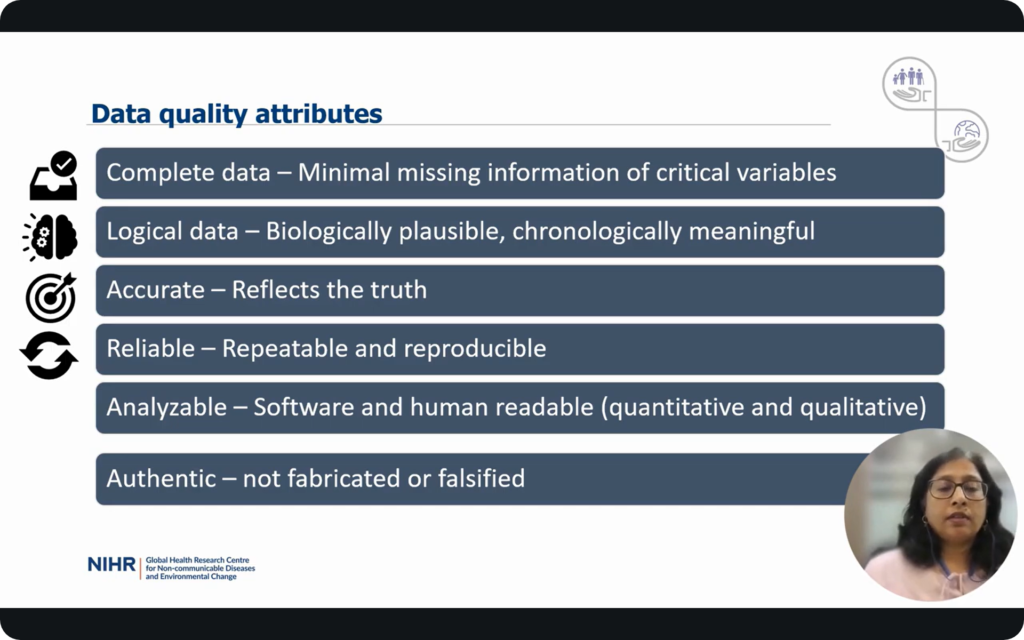
Introduction to Data Quality
Dr. Niveditha Devasenapathy examines the planning and implementation of effective data quality control measures, emphasizing their critical importance. By delving into the various attributes that define data quality, she identifies potential risks and their implications.
Through examples illustrating common challenges in maintaining data quality, Dr. Devasenapathy provides practical strategies to mitigate these issues and ensure robust data quality.
Data Review Plan
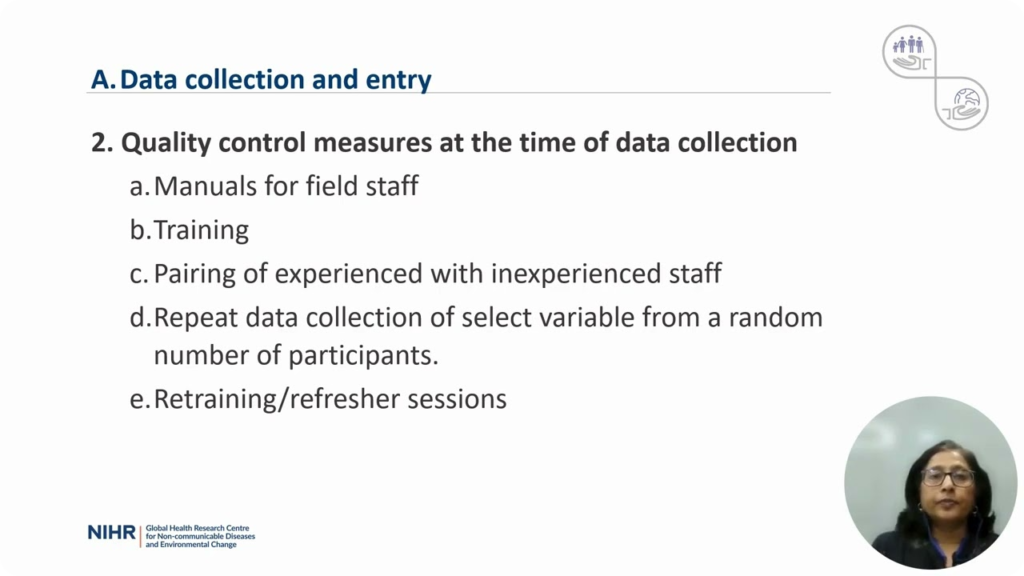
Plan your data review with Dr. Niveditha Devasenapathy as she takes us through the various preventive measures to mitigate errors. Underlining the importance of open dialogue between different teams, clear documentation of checks conducted, and regular reporting guidelines to ensure quality of research data.
Data Security and Sharing
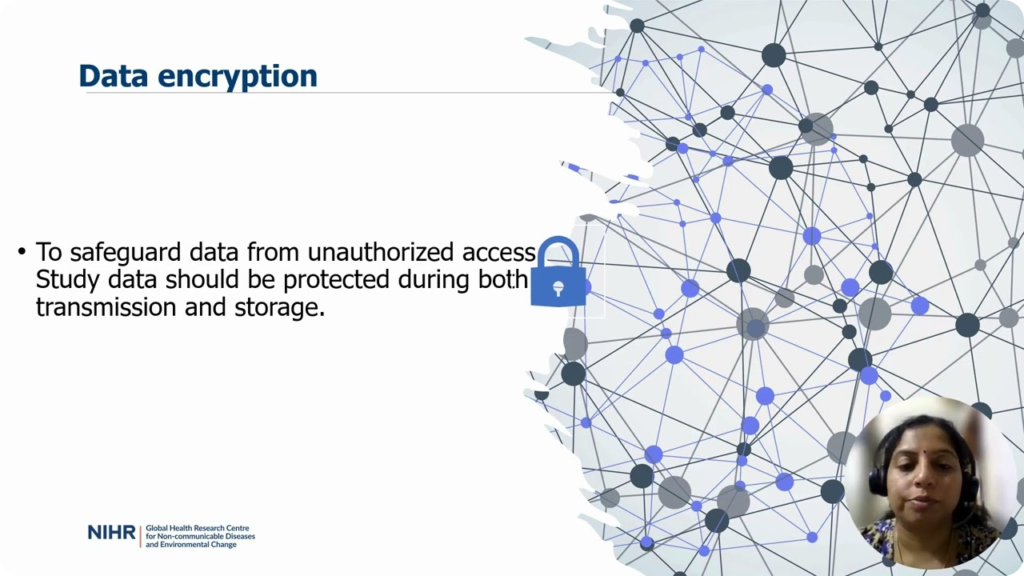
Join Bijini Bahuleyan as she walks us through the importance and process of protecting and anonymising personal & sensitive information. Addressing the steps researchers must take as part of data management to safeguard the privacy of participants while preventing data loss.
Data Sharing
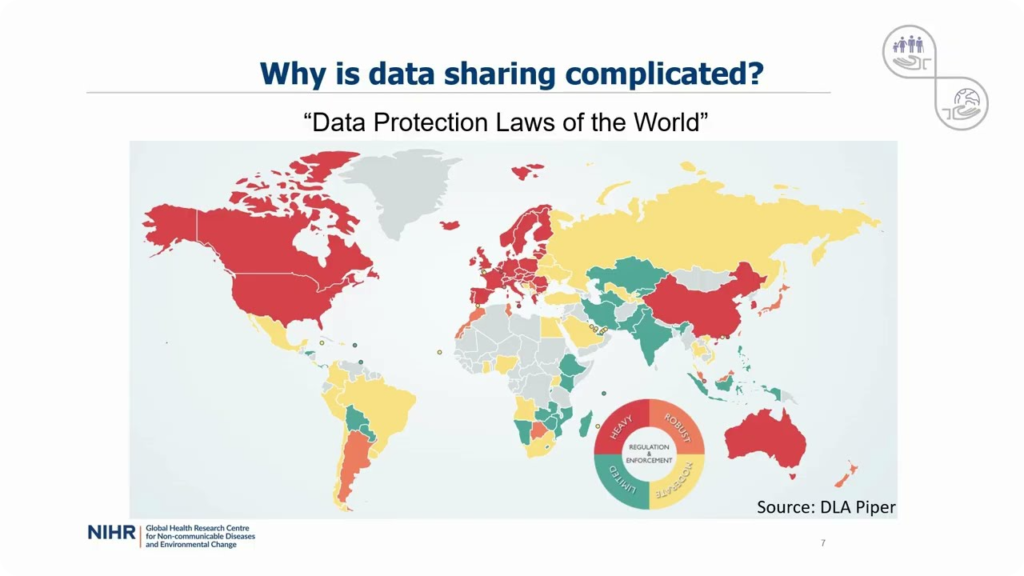
Sindhu Prasad explores the compliance considerations of data sharing, covering the Dos, the Don’ts, and the complexity thereof. Taking us through the key concepts of data ownership, data sharing agreements, consent requirements, and more Prasad highlights the importance of due diligence when sharing data.
Participants praised the useful and accessible nature of the course, asserting its applicability in research practice
“The course is very useful in planning data management for my current study. I have been able to structure my objectives and data very systematically. It gives me a clear understanding of the way I should conduct my study“
——————————————————
This research was funded by the NIHR (Global Health Research Centre for Non-communicable Diseases and Environmental Change) using UK international development funding from the UK Government to support global health research. The views expressed in this publication are those of the author(s) and not necessarily those of the NIHR or the UK governm