The strongest partnerships are rarely created when organisations sign agreements. More often, they are shaped quietly over time, through shared values, mutual trust, and a common commitment to the people they serve.
Although Vikas’s and my professional journeys eventually took us in different directions, they remained connected by a common belief: meaningful and lasting change can only be achieved when communities are recognised as partners rather than passive recipients of development or research. This is the story of how our parallel journeys eventually came together.
Some partnerships begin with a Memorandum of Understanding (MoU), others begin years earlier. Long before anyone realises they are being built. Ours is the second kind.
Looking back, we do not think the partnership between The George Institute for Global Health and PRADAN began when our organisations decided to collaborate in Chhattisgarh. Nor did it begin when we signed a non-financial MoU. The foundations had been laid years earlier, through experiences that neither of us recognised at the time would one day intersect.
As a master’s student eager to work in rural India, PRADAN stood out to me because of its long-standing commitment to working alongside some of India’s most marginalised communities.
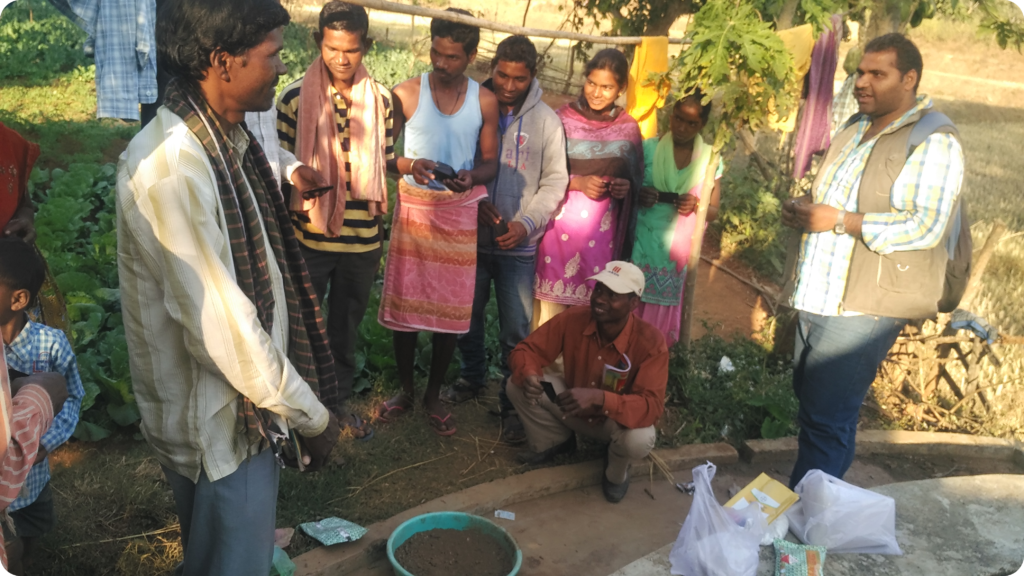
I was fortunate enough to be chosen to work with the team and was first posted to Jharkhand as part of PRADAN’s Development Apprenticeship programme. The apprenticeship challenged many of my assumptions. Instead of immediately assigning us to projects, we were asked to learn first. I spent months living with tribal families in remote villages during village stay, village study phases, followed by classroom learnings, field immersion and reflection.
The objective was simple but profound; before one attempts to solve problems, one must understand how people live. What they value, how decisions are made, the social and cultural hierarchy, and how communities organise themselves.
Vikas’s professional journey shares many parallels with my own. He too chose to dedicate his career to working alongside rural communities, although his path began much earlier and was shaped by a different academic background as an MBA graduate. While our careers eventually diverged, with me moving on to explore other opportunities, Vikas continued his journey with PRADAN and today serves in a much more senior leadership role.
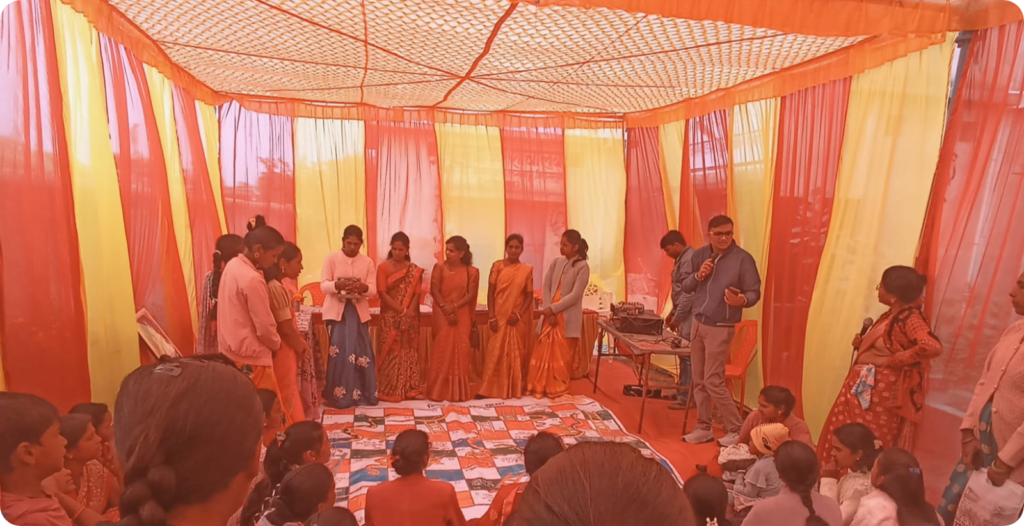
My career took me into academia before I joined the George Institute as Community Engagement and Involvement (CEI) Manager for the NIHR-funded Global Health Research Centre on Non-Communicable Diseases and Environmental Change. While I moved from grassroots development into global health research, the questions remained remarkably familiar.
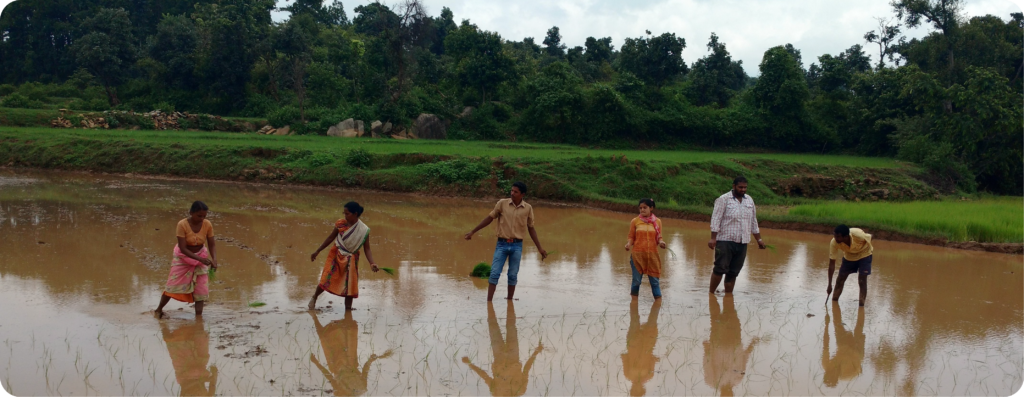
How do researchers build trust in places where they have never worked before?
How can communities influence research rather than simply participate in it?
How can research partnerships become genuinely collaborative rather than transactional?
What resonated with me most was that these questions were not peripheral to the Centre’s work, rather they were central to it.
The Centre’s approach recognised CEI as a core component of high-quality research rather than an activity conducted after research decisions had already been made. CEI was embedded throughout the research lifecycle, from proposal, formative research to co-production, implementation, and evaluation. As CEI Manager, my role was to help build those relationships and create opportunities for communities, civil society organisations, frontline workers, and government stakeholders to contribute meaningfully to the research process. For me, it felt like a homecoming to the principles I had first encountered years earlier, now being applied within a rigorous global health research programme.
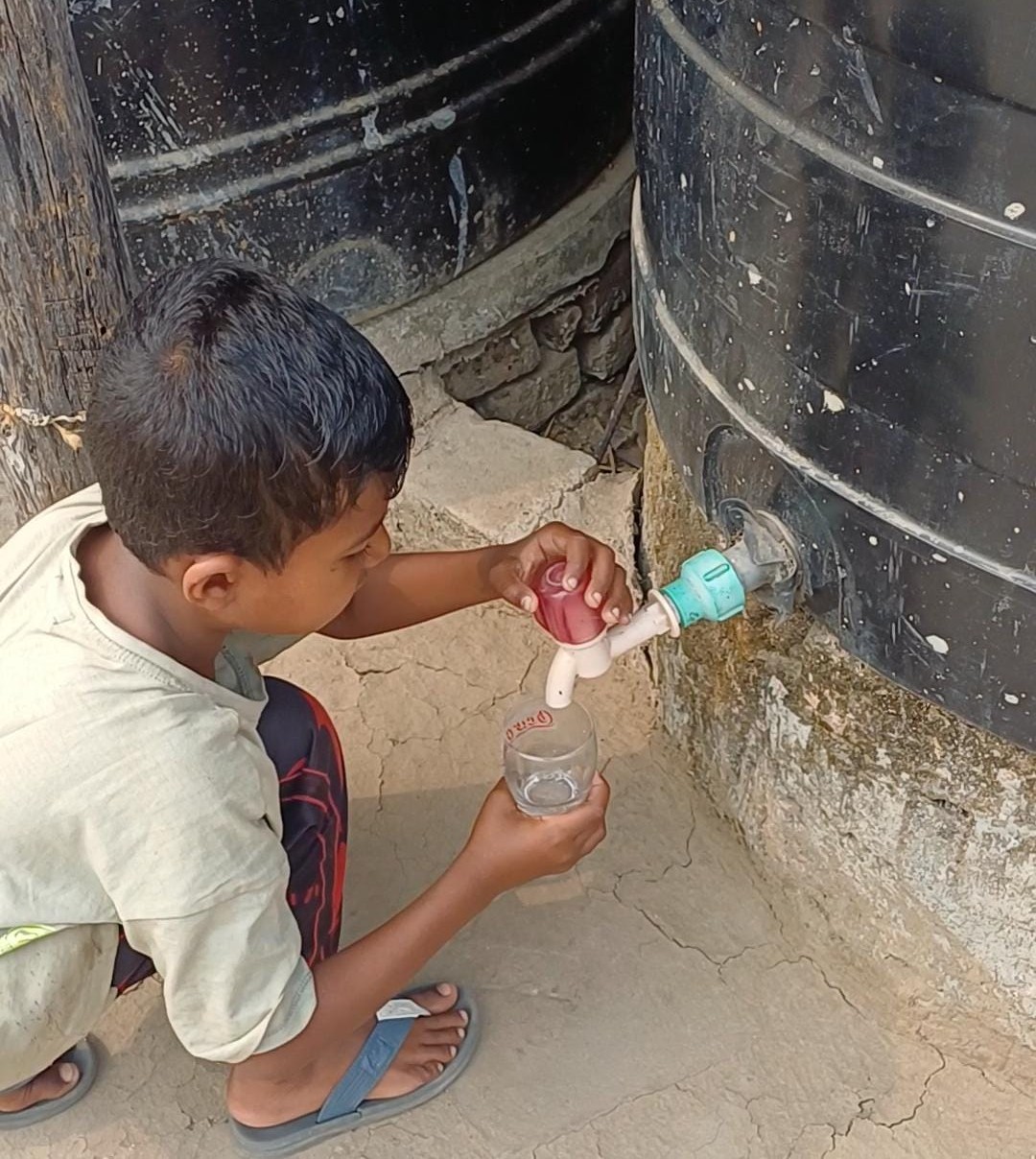
One of the Centre’s implementation research sites was Surguja district in Chhattisgarh, where researchers were co-developing a intervention with communities, government stakeholders, and civil society organisations to improve nutrition among children receiving meals through schools and Anganwadi centres.
Unlike many organisations already working in the district, we came to Surguja without existing institutional relationships. Before we began organising workshops or collecting data, we invested considerable time in understanding the local landscape, mapping stakeholders, meeting officials from government departments, engaging civil society organisations, and building relationships with communities.
When we started our stakeholder engagement, we mapped all the relevant stakeholders and while reviewing our stakeholder registry, one organisation immediately caught my attention, “PRADAN”. Then I noticed the contact person’s name, “Vikas Tandon”.
I picked up the phone. And, like many conversations between former colleagues, it began with catching up on life.
Where are you these days? What kind of work are you doing? How has the journey been?
Neither of us realised that this conversation would become the beginning of something much larger.
“When Maroof called after several years, I assumed we were simply catching up,” Vikas recalls.
“We spoke about where life had taken us and the work, we were each doing. I was working in Surguja with PRADAN, supporting community institutions, rural livelihoods, agriculture, and nutrition-related initiatives. As we spoke, it became clear that although we now represented different organisations, our work had a lot of synergies.”
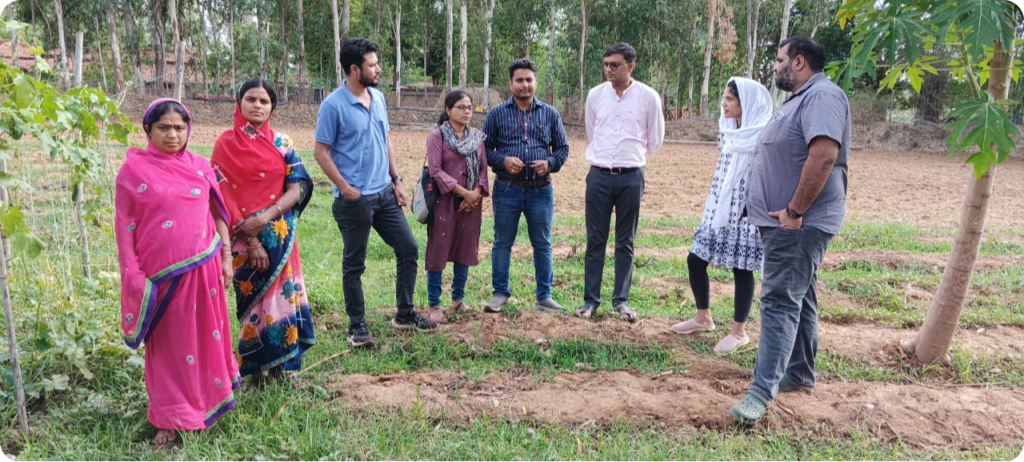
After the conversation, the research team and I
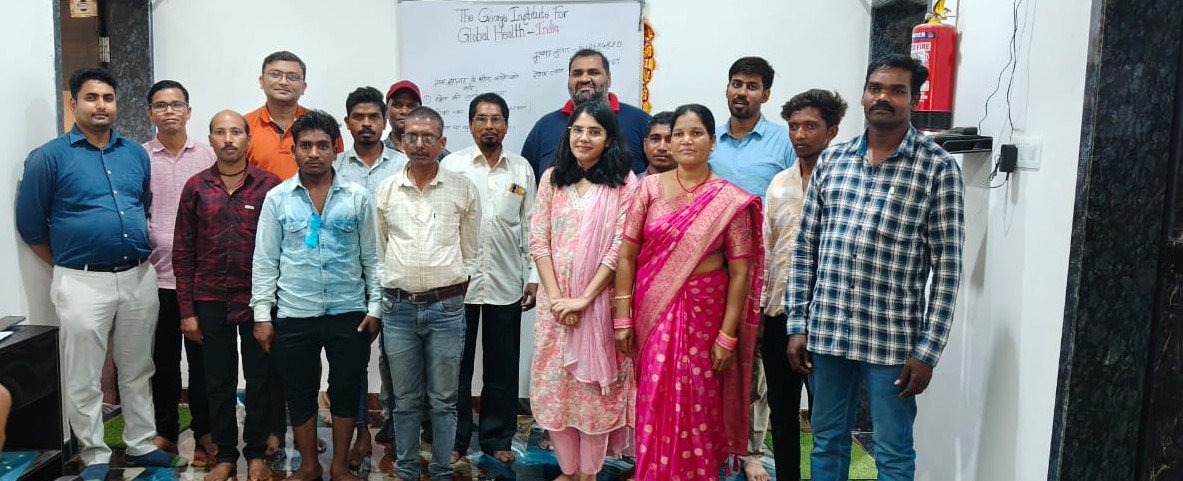
travelled to Surguja several times. Vikas and I visited villages together, meeting farmers, interacting with community institutions, and discussing the work each of our organisations was doing. Those field visits became much more than routine project meetings. They became opportunities to rediscover a shared language.
The partnership became even more significant when our research intervention package identified community-managed nutri-gardens as one of its key components. The Institute brought expertise in research and PRADAN brought decades of experience in rural livelihoods including agriculture and more recently nutrition-sensitive agriculture.
“One conversation during one of those visits stayed with me,” Vikas says.
“As we discussed the possibilities of working together, I remember saying to Maroof, ‘Why don’t we weave our friendship into a MoU? Let’s turn a personal friendship into an organisational partnership.”
At the time, it was simply an idea. Yet the more we spoke with colleagues across both organisations, the clearer it became that this partnership was not being built around funding or convenience. It was being built around shared values. Like most meaningful collaborations, it evolved gradually through conversations, shared field visits, and a growing recognition that both organisations were trying to answer similar questions from different directions.
For us at the Institute, those conversations reinforced an important principle of CEI. Effective research partnerships are not created by identifying organisations that can help implement activities. They are built by recognising institutions that have already earned the trust of communities and understanding how that trust can strengthen research.
Echoing a lesson learnt years earlier; that of trust built patiently through relationships, shared ownership, and local leadership. And the awareness that communities are not mere beneficiaries waiting for solutions; they are partners who already possess knowledge, agency, and an understanding of their own realities.
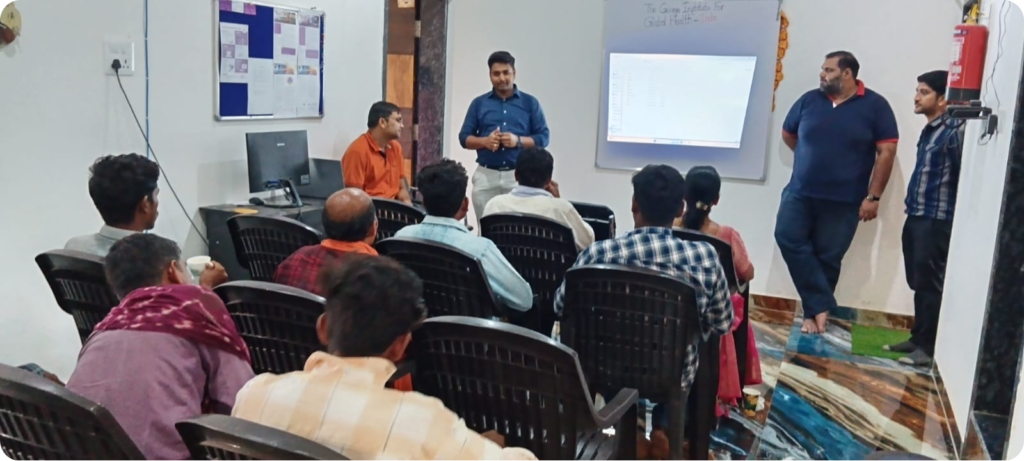
For PRADAN, the conversations opened a different opportunity.
“For many years,” Vikas reflects, “our work had focused on strengthening community institutions, improving rural livelihoods, and supporting farmers. As we discussed the Centre’s work, I realised that research was asking many of the same questions we had been exploring through practice. The difference was that we approached them from different directions.”
Those differences became one of the partnership’s greatest strengths. The non-financial MoU that followed did not create that complementarity; it simply provided a framework through which it could be strengthened.
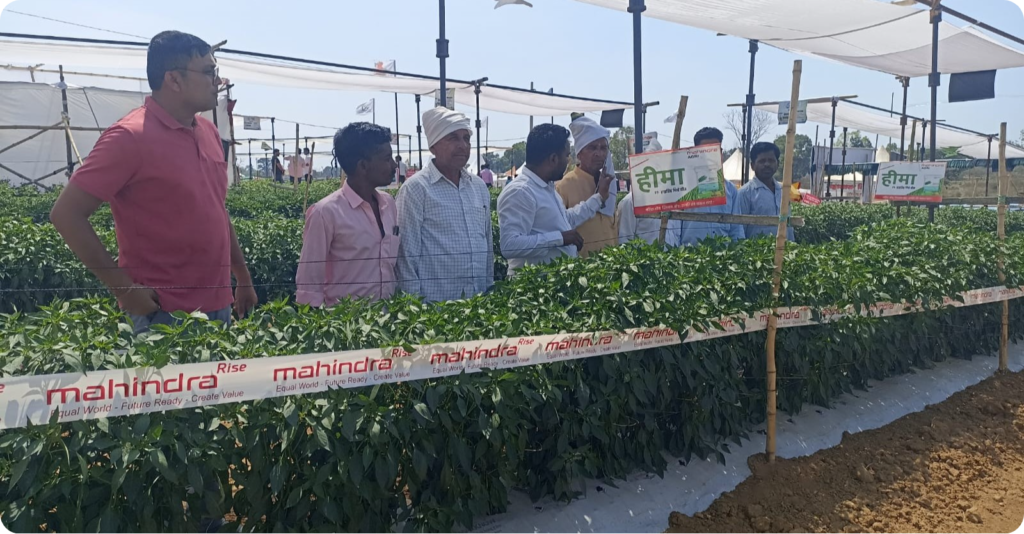
While the research team had worked with communities to identify and refine this intervention, its successful implementation required practical knowledge that extended beyond research alone. This was where the partnership became particularly meaningful. Both organizations retained
their unique identity, allowing our respective strengths to effectively complement one another and create a more impactful collaboration.
“Agriculture was never new to us at PRADAN,” Vikas explains. “But this collaboration encouraged us to think about agriculture differently. Earlier, many of our conversations with farmers centred on increasing production and improving livelihoods. Through this partnership, we began discussing nutrition, sustainability, and long-term health.”
The shift was subtle, but poignant. It was no longer only about how much could be grown. It was also about what was being grown, why it mattered for children’s nutrition, and how farming practices could contribute to healthier and more sustainable food systems.
Naturally, those conversations also raised questions. Organic cultivation, for example, generated curiosity as well as skepticism.
Would it produce enough? Would farmers benefit economically? Could it be sustained overtime?
These were not questions that researchers could answer alone, nor were they questions that practitioners should answer on behalf of communities. Instead, they became questions that everyone explored together.
Rather than promoting predetermined solutions, demonstration sites were established for farmers during the pilot testing phase of the intervention where PRADAN and the Institute could collectively observe, experiment, and learn from experience.
The most valuable outcome was not simply whether a particular farming practice succeeded. It was the creation of spaces where evidence, lived experience, and local knowledge informed one another. In many ways, these learning sites reflected the same philosophy that had brought our organisations together in the first place. Learning happened with communities, not for them.
Looking back today, both of us realise that the partnership has been shaped as much by relationships as by institutions. One memory, in particular, has stayed with both of us.
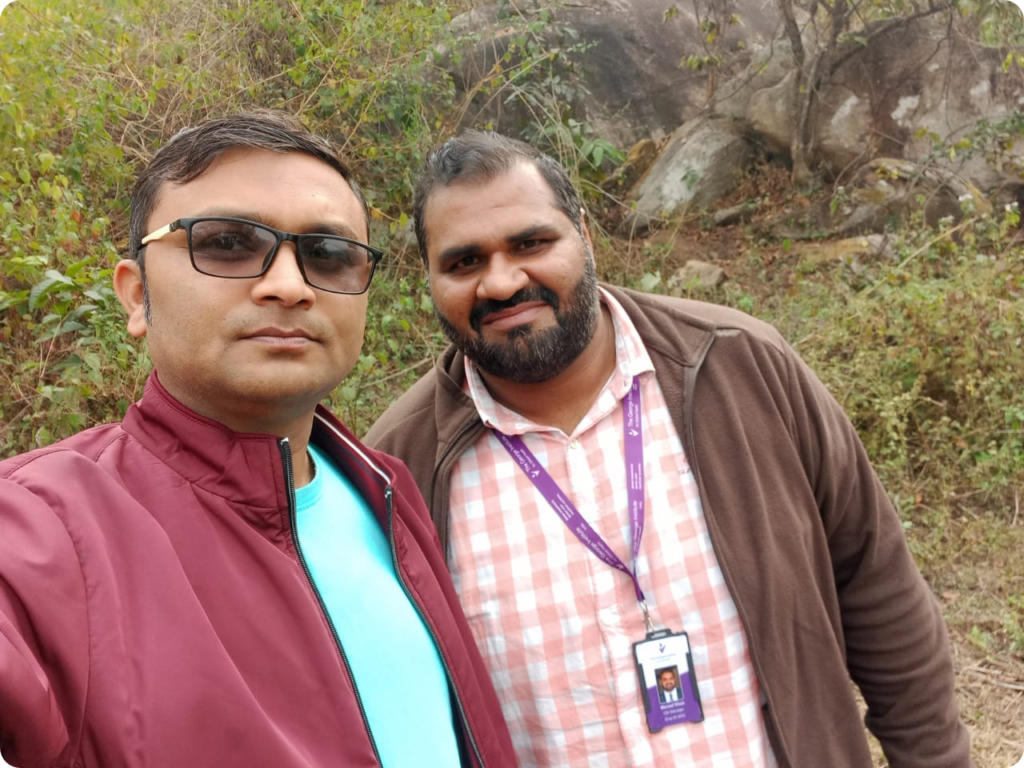
During one of our early field visits in Surguja, after spending the day visiting villages and meeting community members, we paused to take a few photographs together. Nothing about the moment felt especially significant to us at the time. They were simply photographs of two former colleagues meeting again after several years.
Neither of us imagined that those photographs would eventually come to symbolise the beginning of an institutional partnership. They captured something we only recognised much later. The partnership had already begun. Not because an agreement had been signed. Not because a project had started. But because years earlier, through different experiences and different professional journeys, we had developed a common understanding of what meaningful engagement with communities looks like.
Perhaps that is the lesson we carry forward.
Too often, partnerships are assessed by the number of activities completed, outputs delivered, or agreements signed. Those things are significant. But they are rarely what make partnerships endure. Lasting collaborations are built on trust. They require time, humility, mutual respect, and a willingness to recognise that every partner brings different forms of knowledge.
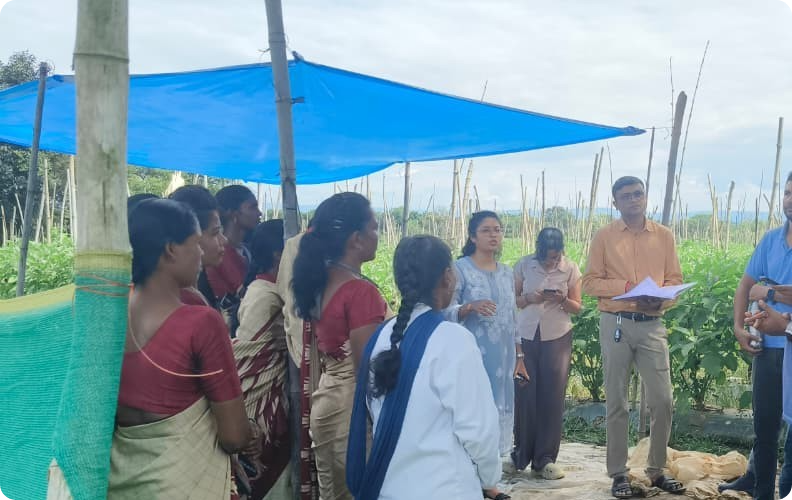
Research institutions contribute evidence, methodological rigour, and opportunities to generate new knowledge. While civil society organisations contribute deep contextual understanding, long-standing relationships, and practical experience of working alongside communities.
Communities themselves contribute something even more fundamental. They bring lived experience, local knowledge, and the ability to shape solutions that are relevant, acceptable, and sustainable. Equitable partnerships emerge when all of these forms of knowledge are valued equally.
For me, joining the Institute demonstrated that CEI can be embedded within rigorous implementation research when institutions deliberately invest in it. Dedicated resources and leadership commitment created the time and space needed to build relationships before expecting results.
For Vikas, the partnership reaffirmed something foundational, that meaningful development is never achieved by a single organisation acting alone. It grows when different institutions recognise each other’s strengths and commit themselves to learning together.
Before we began writing this article, we found ourselves returning to one simple question.
What is the real story here?
It is not that two organisations signed an agreement. Nor is it that two former colleagues met again after several years. The real story is that values learnt in one context can continue to shape decisions in another. Relationships built through community work can transcend organisations.
As Vikas put it during one of our conversations:
“Most MoUs come with a start date and an end date. This partnership has a start date. But in my mind, it has no expiry date. It has no ‘best before’ date. It is an ongoing journey where both organisations continue to learn from one another while working alongside communities towards a shared purpose.”
——————————————————
This blog was co-authored by Maroof Khan and Vikas Tandon.
About Maroof Khan- Maroof is the Community Engagement and Involvement (CEI) Manager for the NIHR Global Health Research Centre for Non-Communicable Diseases and Environmental Change. He oversees the planning and execution of CEI initiatives in India and supports CEI coordination in Bangladesh, India, and Indonesia. Maroof works closely with researchers, policy makers, and civil society organisations to bring community voices to the forefront in public health research.
About Vikas Tandon- Vikas is a development practitioner with over fourteen years of experience at PRADAN, working with marginalised rural communities in Jharkhand and Chhattisgarh. He specialises in women’s empowerment, livelihoods, institution building, and systems strengthening. As Team Coordinator in Surguja, he supports women-led community institutions and serves as a technical partner to The George Institute for Global Health, contributing to the NIHR project’s community managed nutri-garden initiative.
This research was funded by the NIHR (Global Health Research Centre for Non-communicable Diseases and Environmental Change) using UK international development funding from the UK Government to support global health research. The views expressed in this publication are those of the author(s) and not necessarily those of the NIHR or the UK government.